


















Adult ADHD Assessment Calgary
Many adults living with undiagnosed ADHD have spent years pushing through difficulty, developing workarounds, and wondering why things that seem effortless for others feel so much harder for them. They’re often told they’re intelligent but inconsistent, capable but disorganised, or simply not trying hard enough.
An adult ADHD assessment doesn’t just provide a diagnosis — it provides an explanation. At Solasta, our registered psychologists conduct comprehensive adult ADHD assessments in Calgary using gold-standard tools, with results delivered in a detailed written report you can use for workplace accommodations, academic support, or treatment planning.
$1,500 | No referral required | In-person in Calgary or virtual across Alberta
Signs of ADHD in Adults
ADHD presents differently in adults than the hyperactive child stereotype most people are familiar with. Many adults have spent decades masking or compensating for their symptoms — which is part of why so many reach adulthood without a diagnosis.
You might consider an assessment if you frequently experience:
Difficulty sustaining attention Not just distraction — a genuine inability to stay with tasks that don’t hold your interest, even when the stakes are high. You may find yourself rereading the same paragraph, zoning out in meetings, or abandoning projects just before completion.
Chronic disorganisation Missed deadlines, lost items, cluttered spaces, and the persistent sense that you’re always one step behind. This isn’t a character flaw — it reflects differences in executive functioning that make organisation genuinely harder.
Time blindness Difficulty estimating how long things will take, consistently running late, or losing track of time entirely. Many adults with ADHD describe time as feeling binary — now, or not now.
Hyperfocus The flip side of distractibility. When something captures your interest, you can become so absorbed that hours pass unnoticed. This can be a genuine strength, but it also makes it hard to shift attention when needed.
Emotional dysregulation Intense emotional reactions, low frustration tolerance, or difficulty recovering from setbacks. This is one of the most commonly overlooked features of adult ADHD and one of the most impactful on relationships.
Restlessness and impulsivity A persistent sense of inner restlessness, difficulty waiting, interrupting conversations, or making impulsive decisions — even when you know better.
Underachievement despite high ability A persistent gap between potential and performance. Many adults with ADHD are highly intelligent and capable, but struggle to translate that ability into consistent output.
ADHD presents differently in every individual, and many adults have learned to mask or compensate for their symptoms over decades. You might consider an assessment if you frequently experience:
Difficulty sustaining attention
Hyperactivity or restlessness
Chronic disorganisation
Hyperfocus
Emotional dysregulation
Individualized Treatment Plans
After the data collection, our team analyzes the results and prepares a detailed report. This report not only provides diagnostic insights but also includes practical recommendations to guide treatment, coping strategies, or further interventions.
What Does an Adult ADHD Assessment Involve?
Our adult ADHD assessments are conducted by psychologists and usually follow a structured two-appointment process.
Session 1 — Clinical interview
Your psychologist conducts a comprehensive intake interview covering your current symptoms, developmental and educational history, occupational functioning, and relevant medical and family background. ADHD must have been present in some form during childhood to meet diagnostic criteria, so early history is an important part of the picture.
You will also complete a series of standardised rating scales — including the CAARS (Conners’ Adult ADHD Rating Scales) and the Brown EF/A Scales, which assess executive functioning and attention across multiple domains. Where relevant, a collateral questionnaire may also be completed by a partner, close friend, or colleague who knows you well — this provides valuable external perspective on how your symptoms present to others. In some cases we also use the ASRS v1.1 (Adult ADHD Self-Report Scale) as part of the screening process.
Between sessions
Your psychologist scores and interprets all measures, integrates the interview findings, and prepares your written report. This process is thorough and typically takes one to two weeks.
Session 2 — Feedback and results
Your psychologist walks you through the findings in plain language — what the assessment found, what it means, and what it doesn’t mean. You’ll receive your comprehensive written report at this session, which includes diagnostic conclusions and practical recommendations.
Total fee: $1,500
This covers both sessions and the written report. If further testing is required or requested — such as cognitive or academic achievement measures — additional costs will apply and will be discussed with you in advance. Fees may be partially covered by extended health benefits — check with your provider.
What the Written Report Includes
Your Solasta ADHD assessment report is a formal psychological document prepared by a registered psychologist. It includes:
- Diagnostic conclusions based on DSM-5 criteria
- Results and interpretation of all standardised measures
- Summary of clinical interview findings
- Recommendations for treatment, therapy, and coping strategies
- Workplace accommodation letter suitable for submission to employers or HR departments
- Academic accommodation support for post-secondary students
- Documentation for professional licensing bodies or other organisations requiring formal assessment
The report is recognised by employers, universities, and professional bodies across Alberta as evidence of a formal psychological assessment.
Why Choose Solasta for Adult Assessments?
Best ADHD Assessment in Calgary, Rated by Calgary Best Rated
At Solasta, our Calgary psychologists are dedicated to providing compassionate, person-focused care. Here’s why we stand out:
Expertise and Experience
Our team has extensive training in administering and interpreting psychological assessments for adults.
Individualized Approach
We tailor every assessment to address your unique needs and concerns.
Supportive Environment
We create a safe and welcoming space for you to explore your mental health.
Why an Adult ADHD Diagnosis Matters
It reframes years of struggle
Many adults with undiagnosed ADHD have spent years interpreting their difficulties as personal failings — laziness, lack of willpower, not trying hard enough. A diagnosis gives those experiences a neurological context and replaces self-blame with understanding.
It opens the door to effective treatment
Standard approaches don’t always work well for ADHD brains. Once you have a diagnosis, your therapist can draw on approaches specifically designed for ADHD — including CBT adapted for executive functioning, skills-based coaching, and strategies that work with your neurology rather than against it.
It gives you language for your experiences
One of the most meaningful outcomes of a diagnosis is having words for experiences that have often been misunderstood by partners, family members, and colleagues. A formal report gives you something concrete to share and can open conversations that lead to stronger relationships.
It gives you access to accommodations you’re entitled to
A formal diagnosis from a registered psychologist is the recognised document employers and academic institutions need to provide accommodations. Without it, many adults with ADHD are simply told to try harder.
Can You Be Diagnosed With ADHD as an Adult?
Yes — and it’s more common than most people realise. While ADHD must have been present in some form during childhood, many adults were never identified because their intelligence allowed them to compensate, because ADHD was less understood when they were young, or because their presentation didn’t match the hyperactive child stereotype.
Women and girls in particular are significantly underdiagnosed, often presenting with inattentive rather than hyperactive symptoms — which are easier to overlook.
An adult assessment explores both your current functioning and your early developmental history to determine whether ADHD is the most accurate explanation for your experiences.
Let’s Take the First Step Together
We’re committed to helping you uncover the understanding and confidence you deserve.
CAP
All of our psychologists are registered with the College of Alberta Psychologists.
PAA
Many of our psychologists are members of the Psychology Association of Alberta.
CCPA
Many of our psychologists are members of the Canadian Counselling and Psychotherapy Association.
Therapists Specializing in Adult Assessments
Only
Only
Only
Only
Only
Only
Only
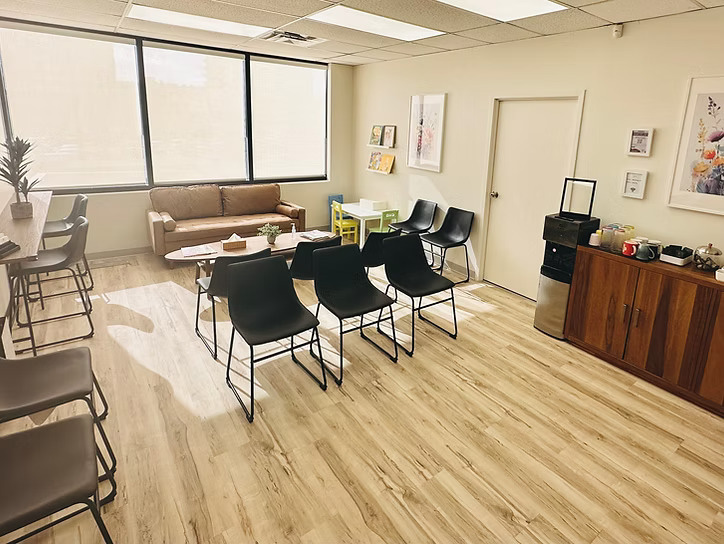
Our Calgary Office Space
Our thoughtfully designed counselling spaces are crafted to create a warm, welcoming environment where you can feel completely at ease.
Get Started With Solasta in Three Easy Steps
Find Your Therapist
Book Online
Choose a date and time that fits your schedule and receive instant confirmation of your appointment.
In-person or Online
Visit our welcoming Calgary office or meet with your therapist online from the comfort of your home.
FAQs
How do I know if I should consider an ADHD assessment as an adult?
Many adults seek an ADHD assessment after years of feeling overwhelmed, disorganized, or inconsistent in their performance at work or in daily life. Common concerns include difficulty sustaining attention, procrastination, forgetfulness, emotional reactivity, and challenges with time management. Some individuals have long suspected ADHD but were never assessed in childhood, while others notice increasing difficulties as life demands grow. An assessment can help clarify whether ADHD is part of your profile and provide a clearer understanding of your strengths and challenges.
What does an adult ADHD assessment involve?
An adult ADHD assessment typically includes a comprehensive clinical interview, standardized rating scales, and a detailed review of your developmental, educational, and occupational history. Whenever possible, information about childhood functioning is also considered, as ADHD is a neurodevelopmental condition. The assessment process is designed to distinguish ADHD from other factors such as anxiety, depression, or stress, ensuring that any diagnosis is accurate and meaningful.
How long does an adult ADHD assessment take in Calgary?
Most adult ADHD assessments are completed over two to three sessions, depending on the complexity of your presentation and the information required. This includes time for interviews, completion of standardized measures, and a feedback session where results and recommendations are discussed. The process is thorough but designed to be manageable and respectful of your time.
Can I be diagnosed with ADHD as an adult if I was never diagnosed as a child?
Yes, many adults are diagnosed with ADHD later in life. While ADHD must have been present in some form during childhood, it is common for symptoms to have been overlooked, misunderstood, or compensated for earlier in life. An adult assessment explores both current functioning and early developmental patterns to determine whether ADHD is the most accurate explanation for your experiences.
What happens after an ADHD assessment is completed?
You will receive a detailed report outlining the results of the assessment, including whether you meet criteria for ADHD. The report also includes personalized recommendations for next steps, which may include strategies for organization and time management, workplace or academic accommodations, and options for medical consultation if appropriate. A feedback session is provided so you can fully understand the findings and ask questions.
What is an adult psychoeducational assessment, and how is it different from an ADHD assessment?
An adult psychoeducational assessment is a broader evaluation of cognitive, academic, and learning processes. While an ADHD assessment focuses specifically on attention and executive functioning, a psychoeducational assessment may also examine areas such as reading, writing, memory, and processing speed. This type of assessment is often helpful for identifying learning disorders, understanding academic or workplace challenges, and guiding accommodations or supports in educational or professional settings.