

Car Accident Counselling Calgary
A car accident can change everything in a matter of seconds. Even when the physical injuries are minor — or when others tell you you’re “fine” — the emotional and psychological impact can be profound, lingering, and deeply disruptive to daily life.
At Solasta Counselling, our registered psychologists and registered provisional psychologists provide evidence-based therapy for adults, teens, and children recovering from motor vehicle accidents (MVAs) in Calgary and across Alberta. We offer direct billing to most major insurance providers, and many clients are eligible for coverage through Alberta’s auto insurance system from the moment of their accident.
The Emotional Impact of a Car Accident
The physical aftermath of an MVA often receives immediate attention. But the psychological effects can be equally significant — and they don’t always appear right away. In the days and weeks following an accident, many people notice:
- Anxiety, fear, or panic — particularly when driving or riding in a vehicle
- Flashbacks, intrusive memories, or nightmares about the accident
- Difficulty sleeping, or waking feeling unsettled and on edge
- Emotional numbness, detachment, or a sense that things feel unreal
- Hypervigilance — feeling constantly alert to danger, startling easily
- Irritability, mood changes, or unexplained anger
- Withdrawal from activities or people you previously enjoyed
- Difficulty concentrating at work, at school, or in daily tasks
- Avoidance of roads, intersections, or situations connected to the accident
- Physical symptoms such as headaches, muscle tension, or fatigue with no clear medical explanation
These responses are not signs of weakness. They are the nervous system’s natural response to a frightening or life-threatening event — and with the right support, they are highly treatable.
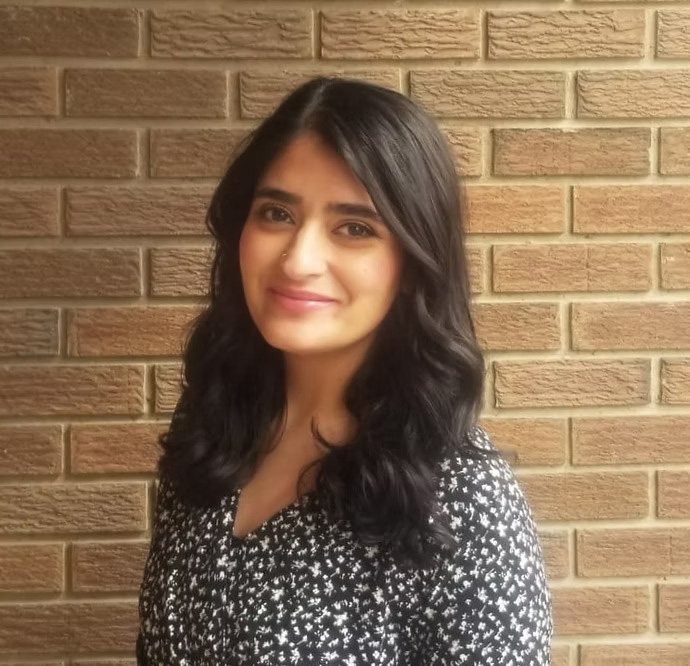
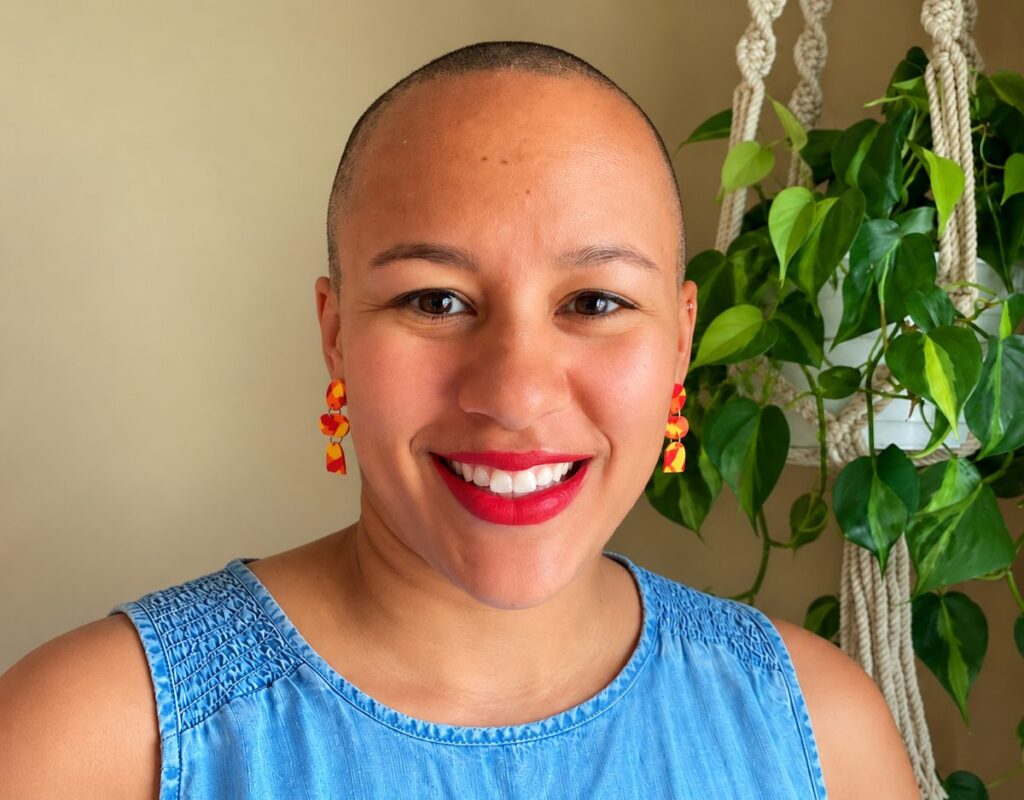
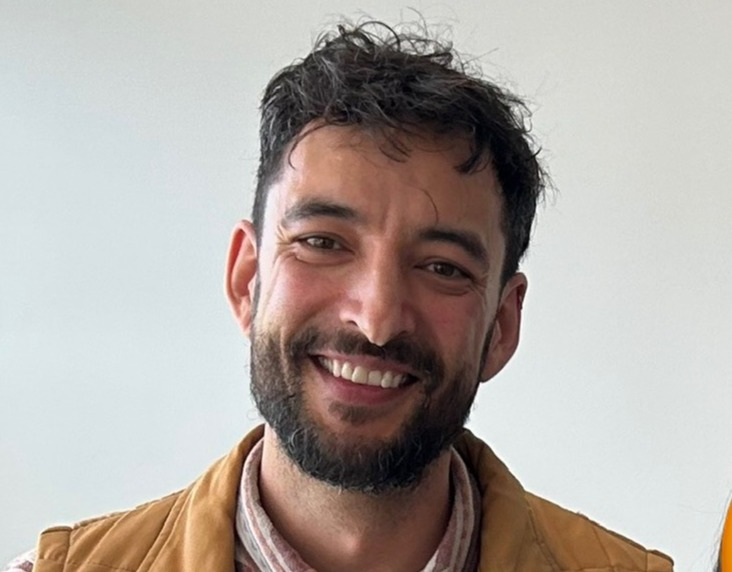
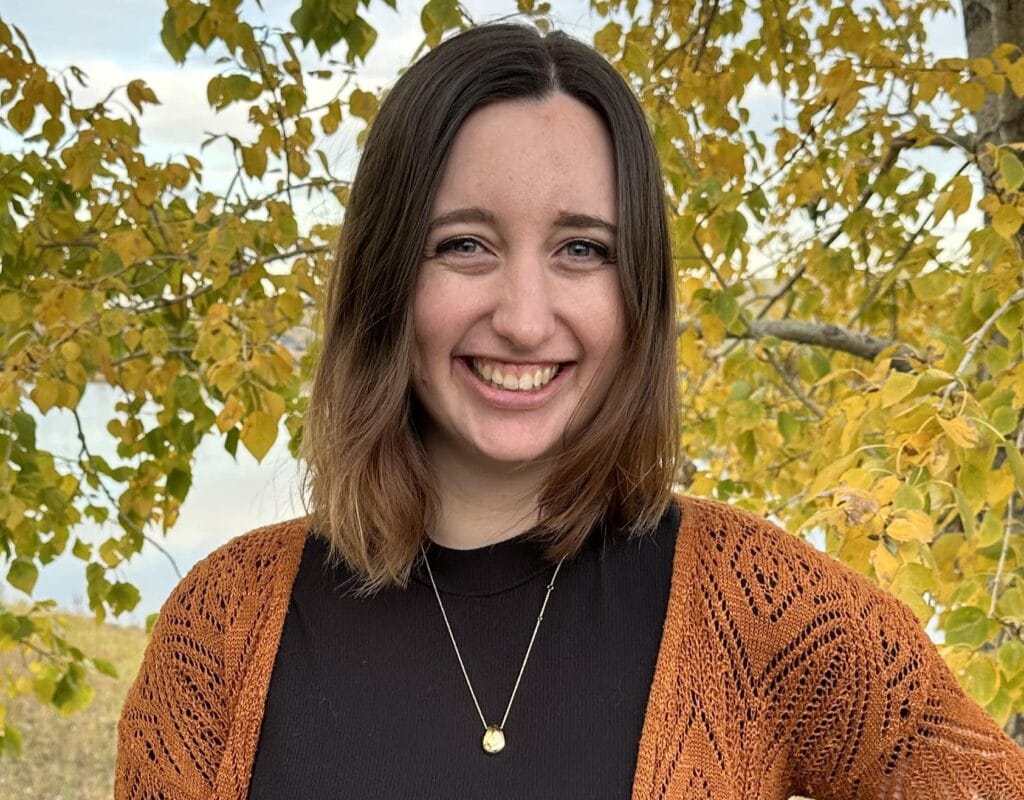
Therapists Specializing in Car Accident Counselling
Only
Only
Only
Only
Only
Only
Only
Only
Only
Only
Only
Only
Am I Covered? Understanding MVA Insurance in Alberta
One of the most common questions we hear is: “Can I afford therapy after my accident?” In most cases, the answer is yes.
Coverage Often Starts Right Away
Alberta’s auto insurance system is designed to give accident victims access to psychological support quickly — in many cases starting from the date of the accident, and without needing a doctor’s referral to begin. Exactly what applies to you depends on your specific policy and current provincial rules, which is why we don’t try to walk you through the fine print here — during your free consultation, we’ll ask about your insurance and help you understand exactly what you’re covered for before you commit to anything.
Coverage Can Extend Well Beyond the Initial Stage
Many clients assume their coverage runs out quickly and stop pursuing treatment as a result. In practice, insurers will often approve continued sessions when a psychologist documents the ongoing clinical need for treatment. At Solasta, our therapists in Calgary handle that documentation directly, so extending coverage isn’t something you have to figure out or advocate for on your own.
Extended Health Benefits
If you or your employer has extended health benefits, your auto insurer will typically require you to access those benefits first. Our team can help you understand how your coverage layers work and will coordinate billing accordingly.
WCB and Other Approved Providers
Solasta is an approved provider for Veterans Affairs Canada (VAC), the Royal Canadian Mounted Police (RCMP), Canadian Armed Forces (CAF), and the Workers’ Compensation Board (WCB). If your accident occurred in a work-related context, you may be eligible for WCB coverage.
Direct Billing
Solasta offers direct billing to over 30 insurance providers including Alberta Blue Cross, Sun Life, Canada Life, Manulife, Greenshield, and many others. In most cases, you will not need to pay out of pocket and wait for reimbursement — we handle the billing directly.
Not sure what you’re covered for? Contact us and we can help you figure it out before you book.
How We Treat MVA Trauma
At Solasta in NW Calgary, we use evidence-based approaches that are specifically well-suited to the kind of trauma that follows a motor vehicle accident. Some of the most effective are:
EMDR Therapy
Eye Movement Desensitization and Reprocessing (EMDR) is one of the most extensively researched and effective treatments available for trauma and PTSD. It works by helping the brain reprocess distressing memories — including memories of a car accident — using bilateral stimulation such as guided eye movements. Rather than requiring you to talk through the accident in detail repeatedly, EMDR helps the emotional charge stored in those memories diminish so they no longer trigger the same level of distress.
EMDR is recommended by the World Health Organization and the American Psychological Association for PTSD treatment and is particularly well-suited to single-incident trauma such as a motor vehicle accident. Many clients notice significant improvements within 6–12 sessions.
Several of our therapists are trained in EMDR, including for children and adolescents who have been involved in accidents.
Accelerated Resolution Therapy (ART)
Accelerated Resolution Therapy (ART) is a newer evidence-based approach that uses eye movements and voluntary memory replacement to rapidly process traumatic memories. Like EMDR, it works at the level of how memories are stored rather than requiring extended verbal processing. Some clients find significant relief in as few as 1–5 sessions.
Cognitive Behavioural Therapy (CBT)
Cognitive Behavioural Therapy (CBT) is a structured, evidence-based approach that helps you identify and change the thought patterns and behaviours maintaining anxiety, avoidance, and distress following an accident. CBT for MVA trauma typically focuses on:
- Understanding how trauma affects the brain and nervous system
- Gradually facing avoided situations — such as driving — in a safe, controlled way
- Challenging beliefs that developed as a result of the accident (e.g., “the road is always dangerous,” “I am not safe”)
- Developing practical tools for managing anxiety, sleep difficulties, and hyperarousal
Somatic and Body-Based Approaches
Because trauma is held in the body as well as the mind, somatic therapy and body-based techniques can be a powerful complement to EMDR and CBT — particularly for clients experiencing physical symptoms, chronic tension, or a persistent sense of physical unease following an accident. Our therapists integrate these approaches as needed.
Who Can We Help?
MVA counselling at Solasta in Calgary is available for:
Adults
Whether you were the driver, a passenger, a cyclist, or a pedestrian involved in an accident. We support clients dealing with PTSD, anxiety, depression, sleep difficulties, driving phobia, and the broader emotional disruption that can follow an MVA.
Passengers and witnesses
You don’t need to have been driving to be affected. Passengers, bystanders, and even first responders who witnessed a serious accident can develop significant trauma responses.
Teenagers and young adults
Who may struggle to articulate what they are experiencing or whose symptoms may appear differently, such as changes in school performance, withdrawal from friends, or increased risk-taking.
Children
Younger children may not have the language to describe what they experienced, and their distress may show up as regression, sleep problems, separation anxiety, increased tantrums, or fear of cars. Our therapists include those experienced in working with children using age-appropriate approaches.
How Long Will Recovery Take?
Recovery is different for everyone. Some people find relief after just a few sessions, particularly with approaches like EMDR or ART; others benefit from longer-term therapy, especially where the accident involved complex trauma or significant life disruption. Your therapist will work with you to build a plan tailored to your situation, and can speak to realistic timelines once they understand what you’re working with.
Learn More About Car Accident Counselling at Solasta
When you contact us about MVA counselling, we will:
Help you understand your coverage — we’ll ask about your auto insurance and any extended health benefits so you know exactly what you’re entitled to before your first session.
Match you with the right therapist — connecting you with a clinician whose training and approach best suits what you’re experiencing. Start with a free 20-minute consultation — so you can ask questions and get a feel for fit before committing to anything.
Manage the insurance paperwork — our admin team handles direct billing and insurance correspondence so you can focus on recovery.
Sessions are available in person at our NW Calgary office (1716 16 Ave NW — free parking behind the building) and online across Alberta. Most clients are able to book within days.
How Long Will It Take for Me to Feel Better After an Accident?
Recovery is different for everyone. Some people find relief after just a few sessions, while others benefit from longer-term therapy. Your therapist will work with you to create a plan tailored to your needs.
While healing takes time, therapy offers tools and strategies that make recovery smoother and more manageable.
Are You a Lawyer, Doctor, or Other Healthcare Provider?
If you’re working with clients or patients who’ve been involved in a motor vehicle accident and need psychological assessment or counselling, we welcome professional referrals. Our registered psychologists can provide clinical assessment and formal documentation of psychological impact, treatment planning and progress reporting as required by insurers or legal teams, and collaboration with other members of the client’s healthcare and legal team.
Refer a client three ways:
- Call us directly: (587) 487-7015
- Email us: admin@solastacounselling.ca
- Use our referral form below
CAP
All of our psychologists are registered with the College of Alberta Psychologists.
PAA
Many of our psychologists are members of the Psychologists’ Association of Alberta.
CCPA
Many of our psychologists are members of the Canadian Counselling and Psychotherapy Association.
FAQs
How soon after a car accident should I start counselling?
As soon as possible. Early psychological support significantly reduces the risk of developing long-term difficulties such as PTSD, chronic anxiety, or driving phobia. In many cases, Alberta’s auto insurance system allows you to begin counselling from the date of the accident itself, without waiting for symptoms to become severe — we’ll confirm exactly what applies to your situation during your free consultation.
Do I need a doctor's note to start counselling?
No — in most cases you can contact us directly without a referral and begin accessing coverage right away. Depending on your policy and how long treatment continues, your insurer may ask for documentation from your psychologist at some point — we’ll guide you through that if and when it comes up.
Does insurance cover MVA counselling in Alberta?
In most cases, yes. Alberta’s auto insurance system provides access to psychological services following an accident, and extended health benefits may apply on top of that. Solasta offers direct billing to 30+ insurers, so in most cases you won’t need to pay upfront and wait for reimbursement. We’ll help you understand your specific coverage before your first session.
What happens after the initial coverage period ends?
Your insurer may still approve continued treatment if your psychologist documents the clinical need for it. We handle this documentation and the insurer correspondence directly, so you’re not left navigating it alone.
How many sessions will I need?
This depends on the severity of your symptoms, your goals, and the approach your therapist uses. EMDR and ART can produce significant improvements in relatively few sessions for some clients — sometimes 6–12 sessions. Others benefit from longer-term support, particularly if the accident involved complex trauma, loss, or significant life disruption. Your therapist will discuss a recommended plan with you from the outset.
Is online MVA counselling effective?
Yes. All of our MVA counselling therapists offer secure online sessions across Alberta. EMDR, CBT, and other trauma approaches translate well to virtual formats, and many clients find the convenience of online therapy reduces the practical barriers to consistent attendance — which is important for trauma recovery.
I'm a lawyer, doctor, or adjuster — how do I refer a client?
Call us, email us, or use our referral form — whichever’s fastest for you. We only need the client’s contact information and confirmation they’ve consented to the referral; we handle the rest, including insurance coordination and the documentation your team may need for the file. important for trauma recovery.
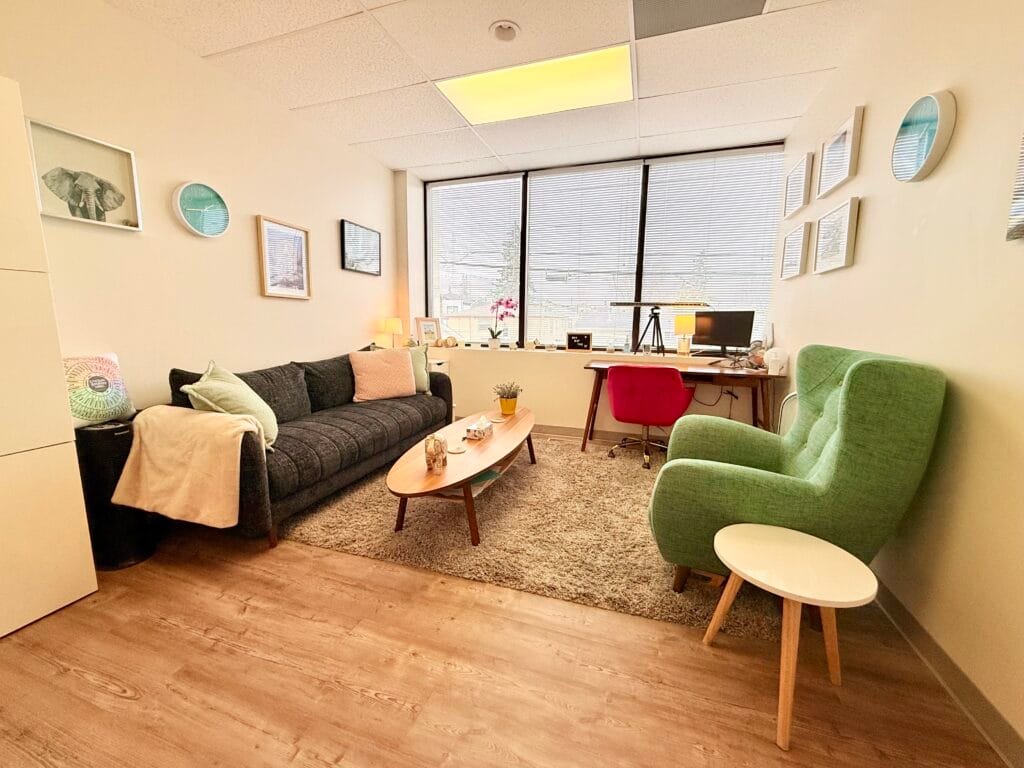
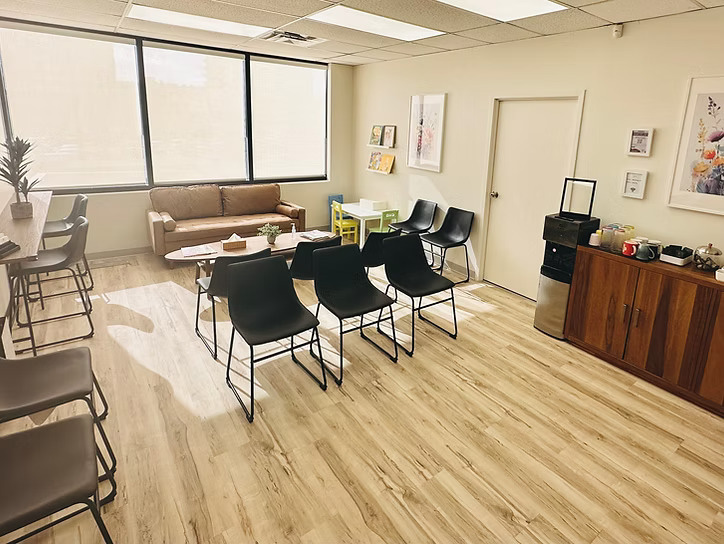
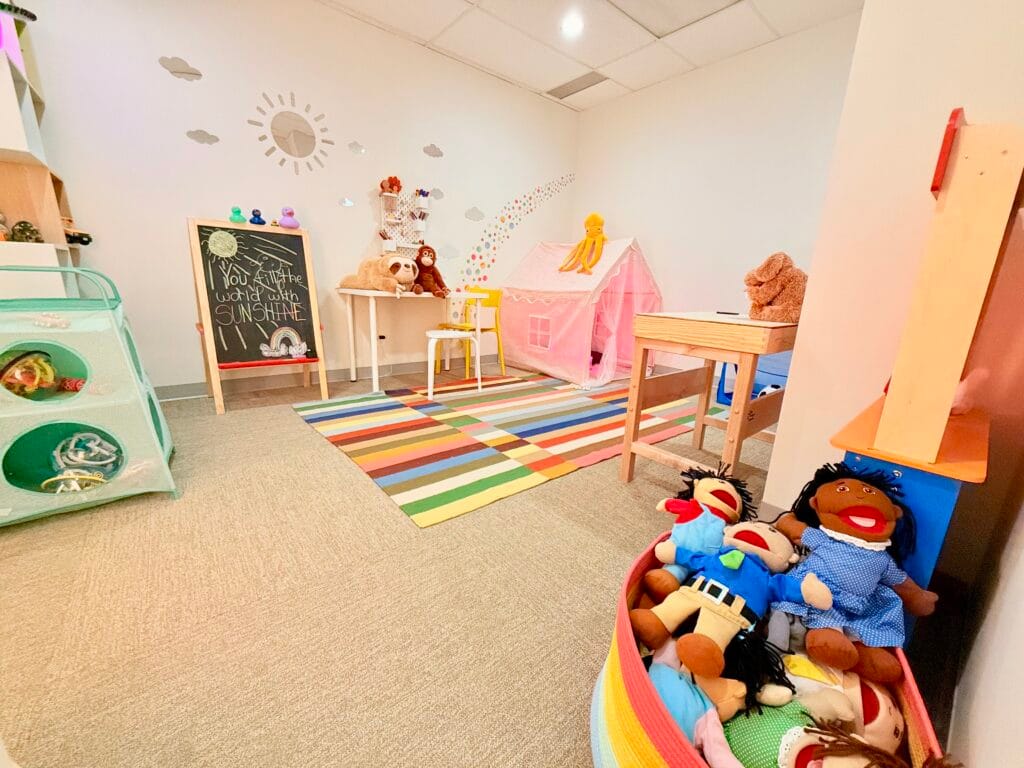
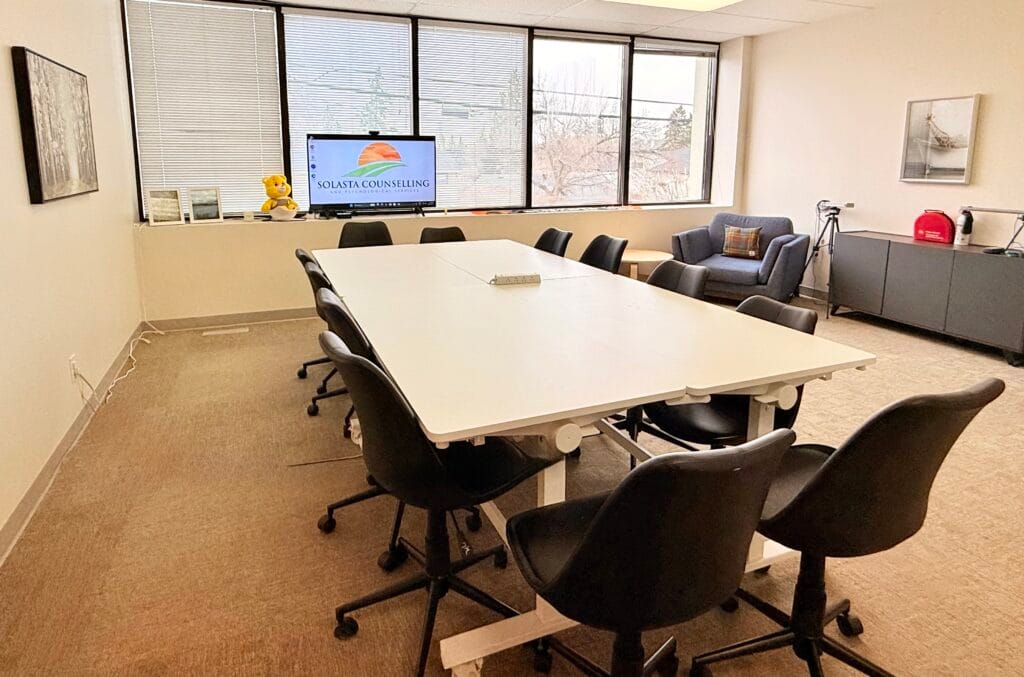
Our Calgary Office Space
Our thoughtfully designed counselling spaces are crafted to create a warm, welcoming environment where you can feel completely at ease.
Get Started With Solasta in Three Easy Steps
Find Your Therapist
Book Online
Choose a date and time that fits your schedule and receive instant confirmation of your appointment.
In-person or Online
Visit our welcoming Calgary office or meet with your therapist online from the comfort of your home.