



Somatic Therapy in Calgary

At Solasta, we offer somatic therapy with Registered Psychologist Cheryl Jejina — a body-centred approach that helps you release stress, trauma, and emotional tension stored in your nervous system. If talk therapy hasn’t been enough on its own, somatic therapy may be what’s missing.

somatic therapy calgary

What is Somatic Therapy?

Somatic therapy is a body-based approach to healing that recognises our experiences aren’t only stored in our minds — they live in our nervous systems, muscles, and breath. Techniques like breathwork, grounding, and mindful body awareness help release what’s been held there, often reaching places that talk therapy alone cannot.

At Solasta, somatic therapy is offered by Cheryl Jejina, a Registered Psychologist with specific training in body-centred and nervous system-based approaches. Sessions are gentle and collaborative — you won’t be asked to relive difficult experiences in detail. Instead, Cheryl guides you to notice what’s happening in your body and work with those sensations toward relief and regulation.

Sessions are available in person in NW Calgary and online across Alberta.

somatic therapy calgary

How Does Somatic Therapy Work?

Somatic therapy is grounded in an understanding of the nervous system — specifically, how our bodies respond to threat and stress, and how those responses can become stuck when they are not fully processed.

somatic therapy calgary

When we experience something overwhelming, the nervous system activates a survival response — fight, flight, or freeze. In healthy circumstances, this response completes itself and the body returns to baseline. But when the experience is too intense, too prolonged, or happens without adequate support, the stress response can become frozen mid-cycle. The body continues to hold the activation — the tension, the hypervigilance, the emotional charge — long after the original event has passed.

This is why people can understand intellectually that they are safe, and still feel anxious. Why they can talk about what happened, and still feel it in their chest. Why they can have years of insight, and still feel stuck.

Somatic therapy helps the body complete what it couldn’t finish.

In practice, this looks like:

Building Body Awareness

The first step is learning to notice what is happening in your body — not to fix it or push it away, but simply to observe with curiosity. Your therapist will guide you to tune into sensations: warmth, tightness, movement, stillness, breath. This awareness itself is often the beginning of relief, because it shifts you from being overwhelmed by an experience to being able to witness it with some distance and calm.

Regulation and Grounding

Once you can notice what is happening, somatic therapy teaches you to regulate it. Grounding techniques, breathwork, and mindful movement help anchor you in the present moment and signal safety to your nervous system. Over time, these skills become resources you can draw on in everyday life — not just in the therapy room.

Releasing Stored Tension

As body awareness and regulation build, the work moves into gently releasing the physical and emotional energy that has been held. This is not a dramatic or forceful process. It is gradual, paced entirely to what your system is ready for, and guided by your therapist with care and attentiveness. Many clients describe this part of the work as a kind of physical and emotional exhale — a sense of something finally being allowed to move through and out.

Integration

The final phase of somatic work is integration — making sense of what has shifted, developing a new relationship with your body, and carrying the tools you have built into daily life. This might include learning to recognise early signs of activation before they escalate, using breathwork during moments of stress, or simply becoming more present in your physical experience as you move through the day.

Therapists Specializing in Somatic Therapy in Calgary

What Can Somatic Therapy Help With?

Somatic therapy is appropriate for a wide range of concerns and is particularly effective when emotional experiences have a strong physical component. At Solasta, somatic therapy in Calgary is commonly used to support:

somatic therapy calgary

Trauma and PTSD

Traumatic experiences are often stored in the body as patterns of tension, hypervigilance, or shutdown — even long after the event itself has passed. Somatic therapy is one of the most effective approaches available for trauma recovery precisely because it works at the level where trauma is held. Rather than requiring clients to talk through traumatic memories in detail, somatic therapy gently guides the nervous system toward resolution through body awareness, regulation, and titrated processing. It can be used alongside other trauma approaches such as EMDR therapy for a comprehensive and deeply effective treatment plan.

Anxiety

Anxiety is not only a mental experience — it lives in the body as muscle tension, shallow breathing, a racing heart, and a nervous system that is chronically on guard. Somatic therapy addresses anxiety at its physical source, teaching you to recognise how anxiety shows up in your body and giving you tools to interrupt and regulate the physical cycle before it escalates. Many clients find that working somatically produces a kind of relief that cognitive approaches alone have not been able to achieve.

Depression

Depression can be experienced not just as sadness or low mood, but as heaviness, fatigue, numbness, and a profound sense of disconnection from the body. Somatic therapy supports reconnection — gently reactivating the body’s natural rhythms of energy, emotion, and sensation. Through movement, breathwork, and grounding, clients often notice improved mood, restored motivation, and a renewed sense of presence. When depression therapy has not produced the hoped-for results through talk alone, adding somatic work can open a new pathway.

Chronic Stress and Burnout

Prolonged stress leaves a physical residue — chronic tension, exhaustion, difficulty sleeping, digestive issues, or a sense of being perpetually activated and unable to rest. Somatic therapy helps identify where stress is stored in the body and provides practical, body-based tools for release and regulation. For clients experiencing burnout, this often means learning to recognise the body’s signals earlier and developing a fundamentally different relationship with rest, boundaries, and self-regulation.

Grief and Loss

Grief is one of the most physical of all emotional experiences — it is felt in the chest, the throat, the limbs. Somatic therapy honours the body’s role in grief and creates space for the physical experience of loss to be acknowledged and processed alongside the emotional and cognitive dimensions. This can be particularly valuable when grief feels frozen or stuck, or when loss has been accumulated over time without adequate space to process it.

Relationship Difficulties and Attachment

Our earliest relational experiences shape how our nervous systems respond to closeness, conflict, and vulnerability. Somatic therapy can help identify and shift these deep patterns, supporting the development of more secure, regulated responses in relationships. This work is often powerful for clients who notice that their body responds to intimacy or conflict in ways they can’t control — heart racing, shutting down, feeling suddenly flooded or frozen.

Body-Based Symptoms Without Clear Medical Cause

Headaches, chronic tension, digestive discomfort, fatigue, and pain that has no clear medical explanation are often the body’s way of communicating unprocessed stress or emotion. Somatic therapy does not replace medical care, but it can be a powerful complement — addressing the nervous system dimension of physical symptoms and providing relief that other approaches have not.

Somatic Therapy at Solasta: What Makes Us Different

At Solasta, somatic therapy is provided by a Registered Psychologist — not an unregulated coach or unlicensed practitioner. This matters. Registered Psychologists in Alberta are governed by the College of Alberta Psychologists, hold advanced academic qualifications, and are trained to work with complex mental health presentations safely and ethically.

Cheryl Jejina brings specific expertise in body-centred and nervous system-based approaches, including Dialectical Behaviour Therapy (DBT), Accelerated Resolution Therapy (ART), and somatic and mind-body integration. Her approach is grounded, research-informed, and deeply respectful of each client’s pace and experience.

Somatic therapy at Solasta can be tailored to each client’s unique needs and integrated with other evidence-based approaches — including EMDR, CBT, ACT, and emotionally focused therapy — depending on what will best support your healing.

Sessions are available in person in our NW Calgary office (Suite 200, 1716 16 Ave NW — free parking behind the building) and online across Alberta through our secure virtual platform.

somatic therapy calgary
adult autism assessment Calgary

Take the First Step

If you have been carrying stress, trauma, or tension in your body and are ready to try something that works differently, we would be glad to help.


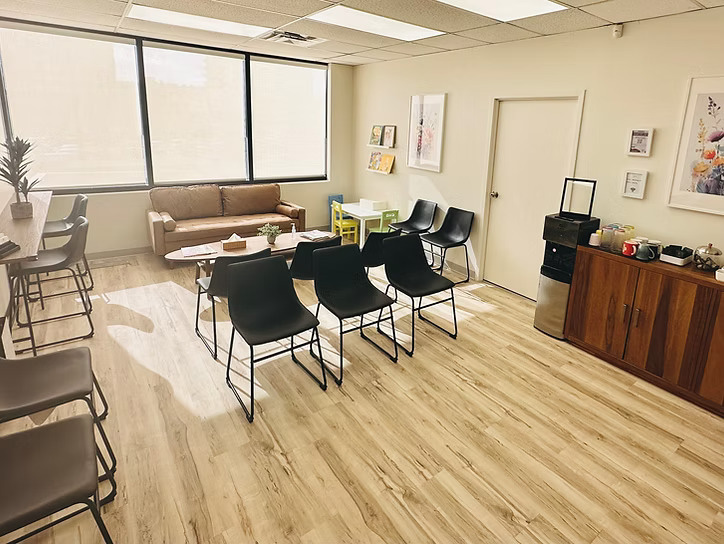
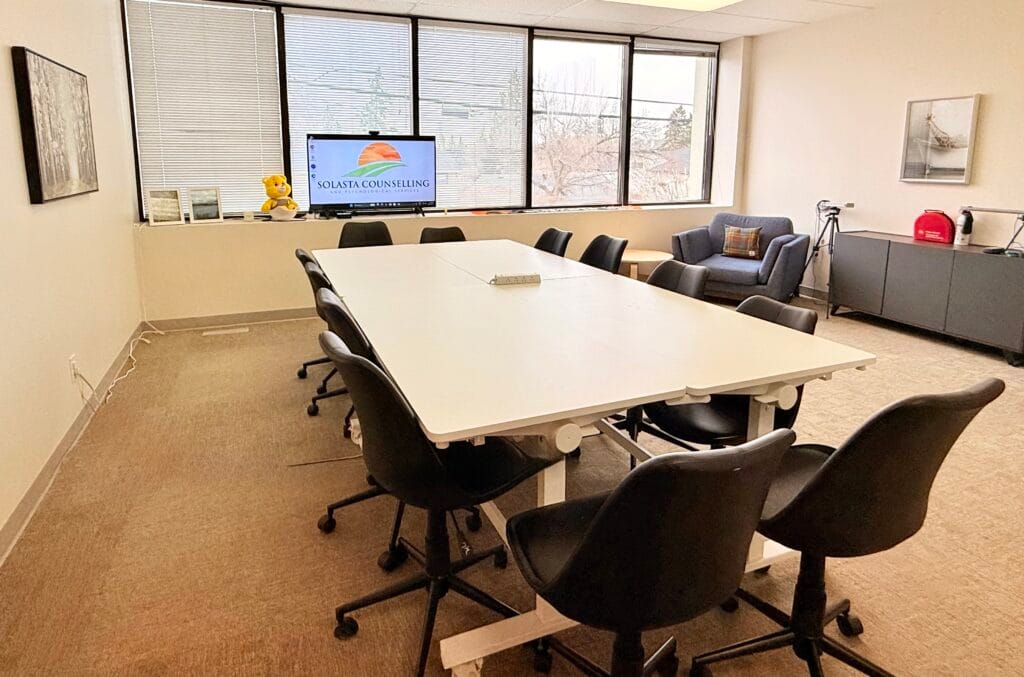
Our Calgary Office Space

Our thoughtfully designed counselling spaces are crafted to create a warm, welcoming environment where you can feel completely at ease.

Get Started With Solasta in Three Easy Steps

1

Find Your Therapist

2

Book Online

Choose a date and time that fits your schedule and receive instant confirmation of your appointment.

3

In-person or Online

Visit our welcoming Calgary office or meet with your therapist online from the comfort of your home.

FAQs

Talk therapy focuses primarily on thoughts, beliefs, and verbal processing of experiences. Somatic therapy works with both the mind and the body, recognising that stress, trauma, and emotional pain are often stored as physical sensations — tension, tightness, shallow breathing, or fatigue. At Solasta, our somatic therapist helps you tune into these bodily cues and use them as a pathway toward healing, often reaching places that talk therapy alone cannot access.

Sessions are gentle and collaborative. You won’t be asked to relive traumatic experiences in detail. Instead, your therapist will guide you to notice what’s happening in your body — sensations, breath, posture — and work with those cues using grounding techniques, breathwork, and mindful movement. Many clients describe sessions as calming and surprisingly physical, even though very little movement is involved.

Many clients notice subtle but meaningful shifts within the first few sessions — feeling calmer, less reactive, or more present in their body. The overall number of sessions depends on your goals and what you’re working through. Your therapist will discuss a recommended approach with you during your first session and adjust as you progress.

Many Alberta extended health benefit plans cover therapy with a registered psychologist or registered provisional psychologist. Solasta therapists are registered with the College of Alberta Psychologists, which means sessions may be eligible for coverage depending on your plan. We recommend checking with your provider before your first session. Visit our fees page for full pricing details.

Yes — somatic therapy is particularly well-suited to trauma recovery. Traumatic experiences are often stored in the nervous system as physical patterns of tension or reactivity, and traditional talk therapy doesn’t always reach them. Somatic therapy gently guides the body through unresolved stress responses, helping to reduce triggers, calm the nervous system, and rebuild a felt sense of safety. It can be used alongside other trauma approaches such as EMDR.

Yes. Somatic therapy can be offered virtually, and many clients find online sessions just as effective as in-person. Your therapist will adapt grounding and body awareness techniques to work well in an online format. Solasta offers secure virtual therapy across Alberta.