

Cognitive Behavioural Therapy (CBT) in Calgary
Cognitive Behavioural Therapy (CBT) is a practical, evidence-based approach that focuses on the connection between your thoughts, emotions, and behaviours. It helps you recognize patterns that may be keeping you stuck and develop more helpful ways of thinking, coping, and responding.
At Solasta, our psychologists and therapists provide CBT therapy in Calgary for concerns including anxiety, depression, stress, phobias, anger, OCD, PTSD, and unhelpful patterns of thinking or behaviour. You don’t need a formal diagnosis to benefit from CBT.
CBT is typically structured, collaborative, and goal-focused. Along with talking through what’s happening, you’ll learn practical strategies that you can use between sessions and in everyday life. Sessions are available in person at our NW Calgary office or online across Alberta.
What is Cognitive Behavioural Therapy?
Cognitive Behavioural Therapy (CBT) is a structured, practical form of therapy built on a simple idea: the way we interpret what happens to us shapes how we feel and what we do next. When those interpretations become rigid or harsh, such as “I’ll embarrass myself,” “I always mess this up” or “something terrible is going to happen,” they can keep anxiety, low mood and stress going long after the original trigger has passed.
CBT helps you notice those patterns, test how accurate they are, and practise different ways of thinking and responding. It’s one of the most widely researched forms of psychotherapy, and it’s recommended in clinical guidelines for a range of concerns, including anxiety disorders, depression and OCD.
CBT is not about “thinking positive” or pretending things are fine. It’s about thinking more accurately and flexibly, and building habits that support how you want to live.
How CBT Works: The Thought–Feeling–Behaviour Cycle
CBT looks at how three things affect one another: your thoughts, your emotions and body sensations, and your behaviour. A change in any one of them shifts the others.
Here’s a common example. It’s Sunday evening and you think, “Tomorrow’s going to be a disaster.” Your chest tightens and your stomach drops. You put off preparing for the week, stay up late scrolling, and wake up tired. Monday is harder as a result, which seems to confirm the original thought. The cycle repeats.
In CBT, you and your therapist slow that cycle down and find the points where you can step in:
Thoughts: catching automatic thoughts and asking what the evidence actually shows
Emotions and body: learning to recognise early signs of stress and settle your nervous system
Behaviour: gradually replacing avoidance and unhelpful habits with actions that rebuild confidence
Over time, small changes at each point add up. The thought loses its grip, the physical response eases, and you have more choice about what you do next.
What a CBT Session Looks Like
Checking in
A brief look at how the past week has gone, including mood, stress and anything significant that has come up.
Setting an agenda together
You and your therapist agree on what’s most useful to focus on that day, so the session has direction.
Working on one pattern
This might mean mapping out a recent difficult moment, examining a recurring thought, planning a gradual step towards something you’ve been avoiding, or practising a new skill in the session.
Agreeing on practice between sessions
Much of the change in CBT happens between appointments. Your therapist will suggest a small, realistic task, such as noticing a thought pattern, trying a behavioural experiment or using a coping skill, and you’ll review it together next time.
You won’t be handed a generic worksheet and left to get on with it. The work is tailored to what you’re dealing with, and the pace is set together.
CBT Techniques We Use
CBT is a family of techniques rather than a single method. Depending on your goals, your therapist may draw on:
Cognitive restructuring
Identifying unhelpful thoughts, weighing the evidence for and against them, and developing more balanced alternatives. Thought records are one common tool for this.
Behavioural activation
A structured way of reintroducing meaningful and enjoyable activities, step by step. It’s particularly helpful for depression, where withdrawal and low energy tend to feed each other.
Exposure therapy
Gradually and safely approaching feared situations, sensations or memories, so that anxiety decreases over time and avoidance loses its hold. It’s used for phobias, panic, social anxiety and health anxiety.
Exposure and Response Prevention (ERP)
The leading CBT-based treatment for OCD. It involves facing intrusive thoughts or triggers while resisting the compulsions that usually follow.
Behavioural experiments
Testing a belief in real life, such as “if I speak up in the meeting, people will think I’m incompetent,” to see what actually happens.
Problem-solving and planning
Breaking down overwhelming situations into manageable steps, which is useful when stress and burnout make everything feel urgent at once.
Relaxation and arousal regulation
Breathing, grounding and muscle-relaxation skills that help settle the body’s stress response, so you can think more clearly in difficult moments.
CBT Psychologists and Therapists in Calgary
Our Calgary psychologists have a wide range of experience and expertise in understanding the unique needs of our clients and helping you reach your therapy goals.
CAP
All of our psychologists are registered with the College of Alberta Psychologists.
PAA
Many of our psychologists are members of the Psychologists’ Association of Alberta.
CCPA
Many of our psychologists are members of the Canadian Counselling and Psychotherapy Association.
Our Calgary CBT Therapists
Our CBT therapy team includes psychologists and therapists who use Cognitive Behavioural Therapy for anxiety, depression, stress, OCD, anger, trauma, and other concerns. CBT may be used on its own or integrated with other approaches depending on your needs and goals.
Only
FAQs
What is CBT and how does it work?
Cognitive Behavioural Therapy (CBT) is a structured, evidence-based approach that helps you understand how thoughts, emotions, and behaviours influence each other. In CBT, you learn practical tools to challenge unhelpful thinking patterns, build coping strategies, and respond to stress or anxiety in more flexible, balanced ways.
What can CBT help with?
CBT is effective for a wide range of concerns, including anxiety, depression, stress, panic, low self-esteem, OCD, social anxiety, worry, negative self-talk, and life transitions. Many people also use CBT to support emotional regulation, confidence building, and healthier coping skills in daily life.
How many CBT sessions do I need?
Everyone is different, but many people notice meaningful improvements within 6–12 sessions. Some prefer short-term, goal-focused work, while others choose to continue longer to build deeper insight and skills. We will tailor the pace and length of CBT to your goals, comfort, and life circumstances.
Is CBT available online in Calgary?
Yes – you can access CBT both in-person at our Calgary location and through secure online counselling. Many clients appreciate the convenience of virtual CBT sessions, especially for busy schedules, mobility needs, or weather-related travel in Alberta.
How is CBT different from talking to a friend or getting advice?
CBT is more than talking – it’s a guided, structured therapy approach led by trained clinicians. Instead of offering advice, we help you understand patterns, develop emotional tools, and practice strategies that are backed by research. CBT provides a supportive space and practical skills you can use long-term.
Do I need a specific problem to benefit from CBT, or is it only for diagnosed conditions?
No — CBT is useful for a specific, well-defined issue (a phobia, a recurring anxious thought pattern) just as much as for something more diffuse, like general stress or low mood you can’t quite pin down.
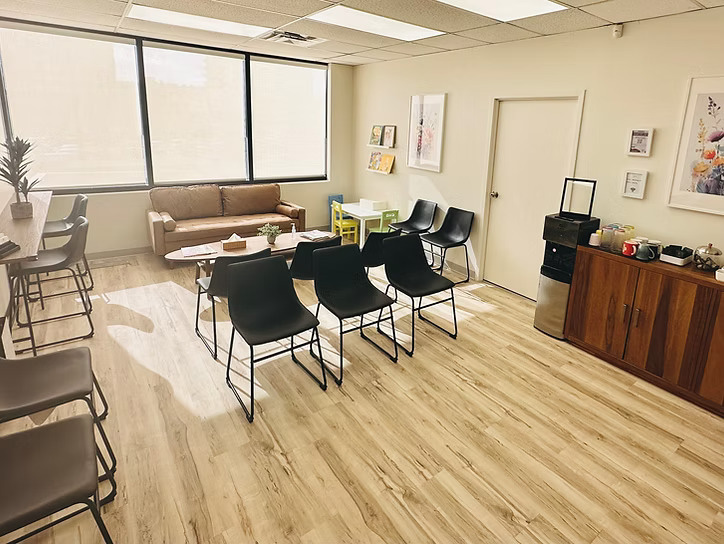
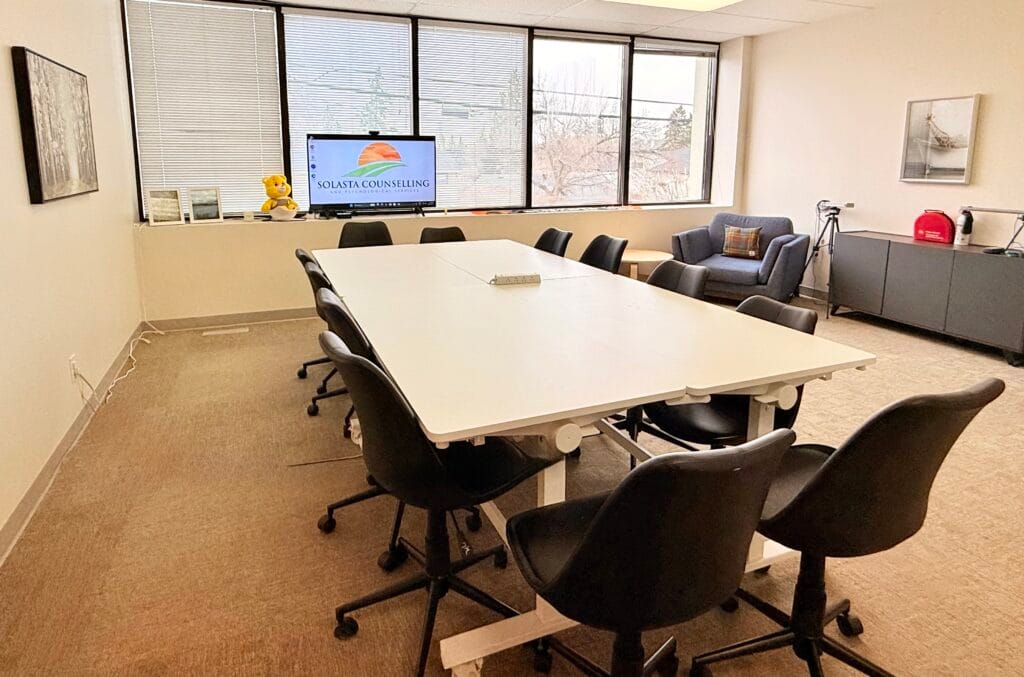
Our Calgary Office Space
Our thoughtfully designed counselling spaces are crafted to create a warm, welcoming environment where you can feel completely at ease.
Get Started With Solasta in Three Easy Steps
Find Your Therapist
Book Online
Choose a date and time that fits your schedule and receive instant confirmation of your appointment.
In-person or Online
Visit our welcoming Calgary office or meet with your therapist online from the comfort of your home.