
Sports Psychology Calgary
The mental side of sport is at least as important as the physical — and it’s the part most athletes never train systematically. At Solasta, our sports psychologists and therapists work with athletes at every level to build the mental skills that separate good performance from great performance.
What is Sports Psychology and How Can it Help?
Sports psychology — sometimes called athlete psychology or performance psychology — is the application of psychological principles to athletic performance and well-being. It focuses on the mental and emotional factors that influence how athletes train, compete, and recover.
Elite athletes across every major sport work with sports psychologists as a standard part of their preparation. The Calgary Flames, Team Canada, and Olympic programmes all employ sports psychology support — because at the highest levels of competition, mental conditioning is what separates athletes of equal physical ability.
But sports psychology isn’t only for elite athletes. It’s for anyone who wants to perform closer to their actual ability — whether you’re a high school hockey player, a university-level athlete, a recreational runner preparing for a race, or a competitive athlete at any level who knows their mental game is holding them back.
Types of Performance Challenges We Address
Our sports psychologists are experienced in providing tailored strategies to address performance-related challenges, helping athletes gain control over anxiety, sharpen focus, and improve both confidence and overall performance.
What We Work On
Performance anxiety — excessive nerves before or during competition that interfere with execution. Racing heart, muscle tension, mental blanking, and avoidance of competition are common signs. Sports psychology provides targeted strategies to manage arousal, stay present, and compete with composure.
Confidence and self-belief — doubt, negative self-talk, and inconsistent confidence are among the most common issues athletes bring to sports psychology. Building genuine, sustainable confidence — not just positive affirmations — is a core focus of our work.
Injury recovery — even after physical recovery, athletes often struggle with fear of re-injury, loss of confidence, or frustration. Mental imagery, confidence-building, and return-to-play strategies are used to support psychological recovery alongside physical rehabilitation.
Focus and concentration — the ability to direct and sustain attention under pressure, manage distractions, and stay in the present moment. Techniques like attentional control, pre-performance routines, and mindfulness-based approaches are used to sharpen focus.
Fear of failure and perfectionism — many high-performing athletes are driven by fear rather than genuine motivation. This produces inconsistent performance and significant mental strain. Cognitive reframing and values-based approaches help athletes shift from fear-driven to growth-driven performance.
Burnout and motivation — prolonged overtraining, pressure, and loss of enjoyment can drain motivation and lead to burnout. Sports psychology helps athletes reconnect with why they compete and restore the intrinsic motivation that drives sustainable performance.
Team dynamics and communication — for team sport athletes, interpersonal skills, communication, conflict resolution, and cohesion are performance factors that sports psychology directly addresses.
Who We Work With
Our sports psychologists and therapists work with athletes across a wide range of sports and levels:
- High school and youth athletes navigating competitive pressure and identity
- University-level athletes balancing sport demands with academic and personal life
- Recreational athletes training for events — marathons, triathlons, cycling — who want to perform closer to their capability
- Competitive club athletes in hockey, soccer, volleyball, swimming, gymnastics, and other sports
- Elite and high-performance athletes preparing for provincial, national, or international competition
- Coaches and parents of young athletes seeking to support athlete mental health
Sports psychology principles also apply to high performers outside sport — executives, performers, and anyone operating under significant pressure who wants to build mental resilience and consistency.
What to Expect During Sports Psychology at Solasta
Our therapists will work closely with you to develop a treatment plan tailored to your unique needs. Here’s what you can expect:
Sports psychology at Solasta is practical and goal-directed. Sessions are focused on your specific performance context — what sport you play, what level you compete at, what’s getting in your way, and what your goals are.
We use evidence-based approaches including CBT for performance, mindfulness-based stress reduction, mental imagery and visualisation, goal setting, attentional control training, and ACT. Sessions are available in person in Calgary and online across Alberta — many athletes find online sessions convenient around training and competition schedules.
Most athletes notice meaningful shifts within three to six sessions. Some work with a sports psychologist seasonally; others benefit from ongoing support across a full competitive year.
Common Questions About Sports Psychology Calgary
If you’re struggling with performance anxiety or mental blocks in your sport and wondering if sports psychology is the right choice, you’re not alone.
Many athletes experience performance challenges that affect their training or competition, and sports psychology can provide effective tools for managing them. Here are answers to some common questions about working with a sports psychologist and how it can support you.
How Do I Know if I Need Sports Psychology?
If you notice that performance anxiety, loss of focus, or fear of failure is affecting your training, competitions, or confidence, working with a sports psychologist can be a powerful way to regain control and perform at your best.
“How long will it take to see improvement?”
Some athletes notice positive changes after just a few sessions, while others benefit from ongoing support throughout their season or career. Your sports psychologist will collaborate with you to set clear goals and a plan that fits your performance needs.
Can Sports Psychology Help Me Stop Feeling Overwhelmed in Competition?
Yes, sports psychology can significantly reduce the intensity of performance anxiety and stress during competition.
“How can a sports psychologist help with this?”
Through techniques such as cognitive reframing, relaxation strategies, and mental rehearsal, athletes learn to manage triggers, stay composed, and perform with confidence under pressure.
Will Sports Psychology Help Me if I Struggle With Nerves Around Teammates or Crowds?
Absolutely.
“How can a sports psychologist help with this?”
Sports psychology helps athletes gradually confront performance-related fears, develop stronger communication and teamwork skills, and reduce negative self-talk, building confidence in both practice and competition settings.
Why Choose Solasta for Sports Psychology?
Our team of sports psychologists in Calgary uses effective, evidence-based strategies to help athletes manage performance anxiety, sharpen focus, and regain a strong sense of control in competition.
CAP
All of our psychologists are registered with the College of Alberta Psychologist.
PAA
Many of our psychologists are members of the Psychology Association of Alberta.
CCPA
Many of our psychologists are members of the Canadian Counselling and Psychotherapy Association.
Therapists Specializing in Sports Psychology in Calgary
Only
Only
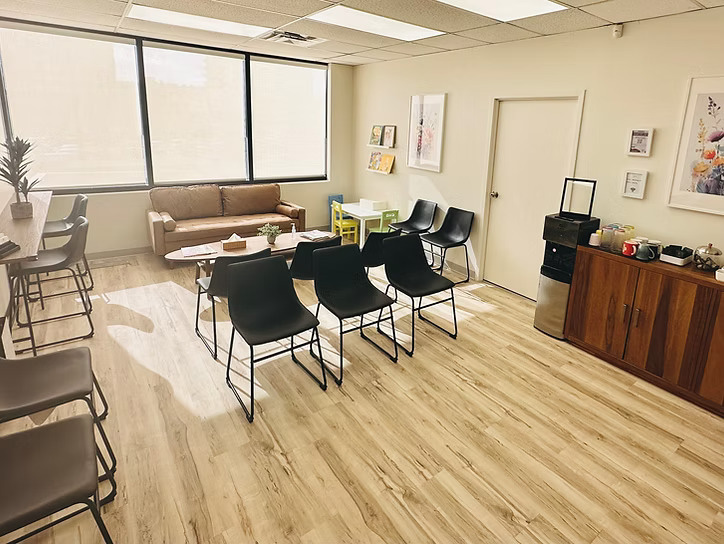
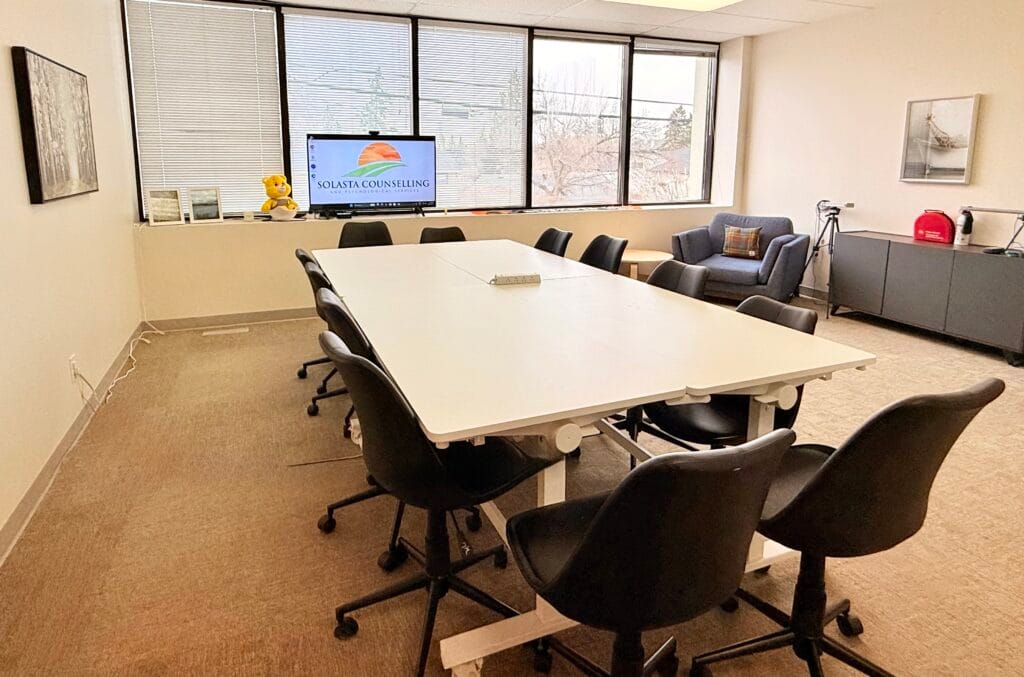
Our Calgary Office Space
Our thoughtfully designed counselling spaces are crafted to create a warm, welcoming environment where you can feel completely at ease.
Get Started With Solasta in Three Easy Steps
Find Your Therapist
Book Online
Choose a date and time that fits your schedule and receive instant confirmation of your appointment.
In-person or Online
Visit our welcoming Calgary office or meet with your therapist online from the comfort of your home.
FAQs
Do I need to be an elite athlete to benefit from sports psychology?
No. Sports psychology is beneficial for athletes at every level — from youth and recreational athletes to university and elite competitors. If you feel your mental game is limiting your performance or enjoyment of your sport, sports psychology can help regardless of your level.
What's the difference between a sports psychologist and a mental skills coach?
A registered psychologist can address both performance enhancement and underlying mental health concerns — including clinical anxiety, depression, trauma, or burnout — and their services are typically covered by extended health insurance. A mental skills coach focuses purely on performance techniques and is not a regulated health professional. At Solasta, our sports psychology services are provided by registered psychologists and therapists.
Are sports psychology sessions covered by insurance?
Sessions with our registered psychologists and registered social workers are typically covered by extended health benefit plans. Most major insurers cover registered psychologist services — check your plan for details.
How many sessions will I need?
Most athletes notice meaningful changes within three to six sessions. Some athletes work with a sports psychologist for a defined block around a competitive season; others maintain ongoing support. Your therapist will discuss realistic timelines and goals with you in the first session.
Can I do sessions online?
Yes. All sports psychology sessions are available by secure video for athletes anywhere in Alberta. Many athletes find online sessions more convenient around training and competition schedules.
Do you work with youth athletes?
Yes. We work with athletes from high school age upward. For younger athletes, we may involve parents in the initial session to ensure goals and context are well understood.