
Scott McKirdy is a Registered Psychologist and co-owner of Solasta Counselling in Calgary, AB. View Scott’s profile >>
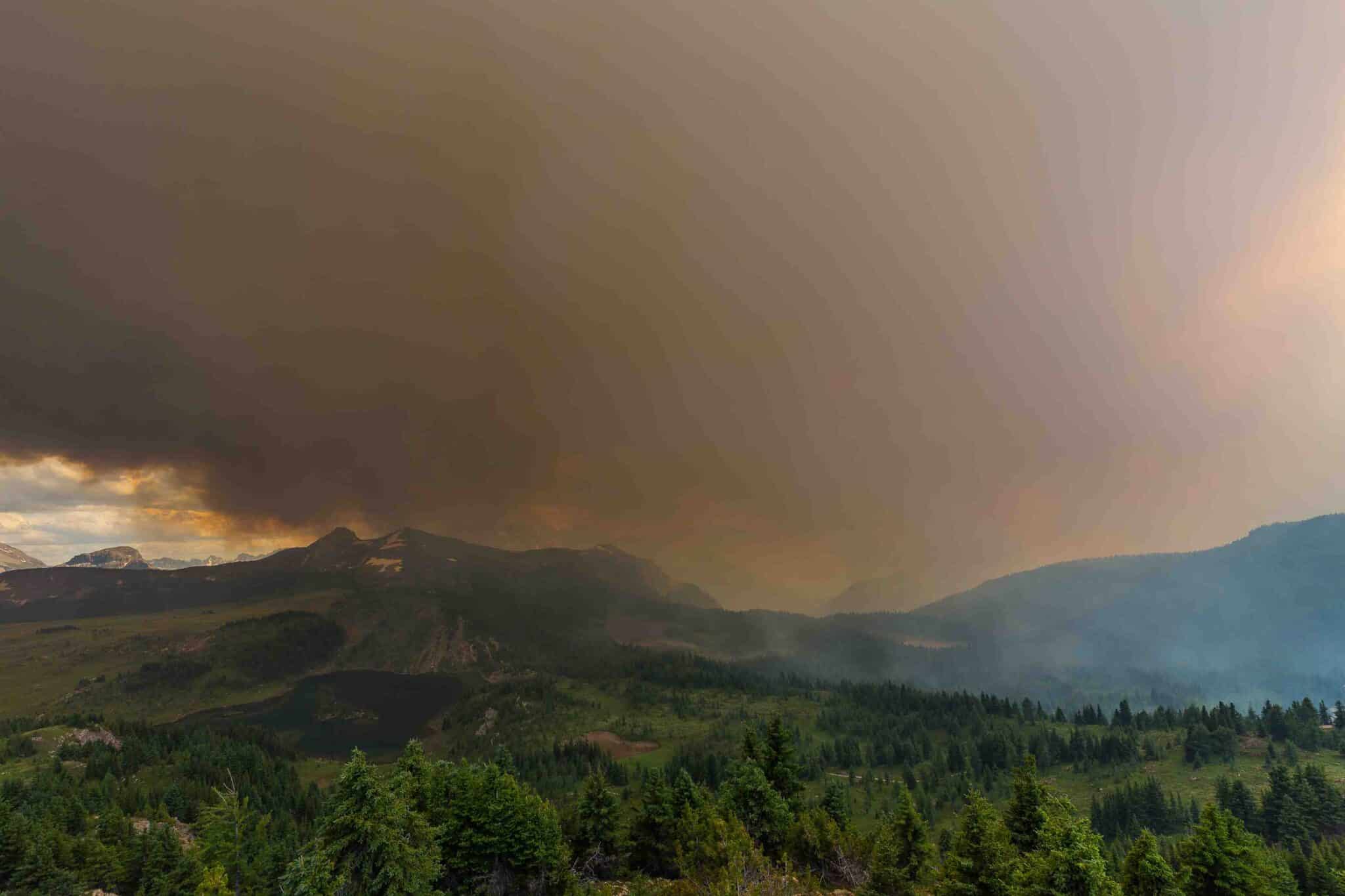
In late June 2026, Calgary spent several days under an air quality warning as smoke from wildfires in northern Saskatchewan and Manitoba drifted across the city, pushing the Air Quality Health Index (AQHI) up to 8 — high risk. It won’t be the last warning of the summer. For most Calgarians, this is simply what July and August look like now: checking the AQHI before deciding whether to bike to work, keeping the kids inside on a day that should be a pool day, watching the mountains disappear behind a haze that wasn’t there yesterday.
We tend to talk about wildfire smoke as a physical health issue — sore throats, headaches, irritated eyes. It is that. But a growing body of research shows it’s a mental health issue too, and not in a vague, “everything is connected” way. Smoke exposure has a measurable relationship with anxiety, depression, and mood.
If the last few smoke-heavy days have left you feeling off — flat, on edge, more irritable than usual — you’re not imagining it, and you’re not alone.
What the Research Actually Shows
A Harvard T.H. Chan School of Public Health study published in 2025 analyzed emergency department visits across California during a heavy wildfire season and found that a 10 μg/m³ increase in wildfire-specific fine particulate matter (PM2.5) was linked to a measurable rise in mental health-related ED visits for depression, anxiety, and mood disorders — with effects lasting up to seven days after exposure. Researchers noted that women, children and young adults, and people already managing a mental health condition showed the highest risk.
The mechanism isn’t fully understood yet, but researchers believe fine particulate matter may contribute to neuroinflammation — physical changes in the brain that can worsen mood and anxiety symptoms, separate from the psychological stress of the smoke itself. This tracks with a broader pattern in air pollution research more generally: people who consistently breathe worse air tend to report higher rates of anxiety and depression, smoke season or not.
In other words, smoke season isn’t just an inconvenient backdrop to your mental health — for some people, it’s an active contributor to it.
Why Smoke Season Is Uniquely Hard, Beyond the Air Itself
The direct physiological effects are only part of the picture. Smoke season tends to stack several smaller stressors on top of each other, and it’s the stacking that gets people:
Your routine gets disrupted. Runs, bike commutes, patio time, kids’ outdoor play — the things a lot of people rely on to manage stress and mood become off-limits or risky on high AQHI days, right when you need them most.
There’s a low hum of uncertainty. Unlike a single bad-weather day, smoke season doesn’t have a clear end date. Not knowing whether tomorrow will be clear or a repeat of today makes it hard to plan, and that kind of ongoing uncertainty is its own quiet stressor.
It can tip into genuine eco-anxiety. For some people, smoke season isn’t just a seasonal nuisance — it’s a visceral, recurring reminder of climate change, and each bad air day reopens that worry.
It’s isolating in a specific way. Summer is normally when people see each other most — patios, parks, backyard barbecues. Smoke keeps people indoors and apart during exactly the months they’d usually be the most socially connected, which quietly compounds low mood.
Who Tends to Feel It Most
Based on the research so far, a few groups are worth paying closer attention to:
- People already managing anxiety, depression, or another mental health condition — smoke exposure appears to act as a flare trigger, not just an added annoyance
- Parents of young kids, who are managing both their own stress and a household of restless kids stuck inside
- Older adults and people with chronic health conditions, who face compounded physical and mental health risk
- Anyone whose usual coping tools (exercise, being outside, social time) depend on decent air quality
If you fall into one of these groups, it’s worth being a little more deliberate about your coping plan during high-AQHI stretches, rather than waiting to see how you feel.
What Actually Helps
None of this means you’re at the mercy of the AQHI reading. A few things genuinely help:
- Check the AQHI, not just the weather, before you plan your day. Alberta’s wildfire smoke information page and the Environment Canada AQHI tool for Calgary are both quick daily checks. Treat a high reading the way you’d treat a forecast of freezing rain — a reason to adjust the plan, not push through it.
- Create one reliably clean-air space at home. Keeping windows closed on bad days and running a HEPA filter or air purifier in one main room (even just a bedroom) gives you somewhere to reset, especially useful if you’re working from home.
- Move your coping tools indoors instead of skipping them. If a run or a walk is normally how you manage stress, swap it for an indoor workout or a walk at the mall rather than just losing the activity entirely for the week.
- Stay connected on purpose. Since smoke naturally pulls people apart during a season built for togetherness, it’s worth being a bit more intentional about texting a friend or planning an indoor hangout rather than waiting for the patio plans to happen organically.
- Give yourself permission for a lower-output week. If you’re more tired, foggy, or short-tempered during a smoke stretch, that’s a plausible physiological response, not a personal failing. Lowering your expectations of yourself for a few days is a reasonable response, not giving up.
- Limit how much time you spend refreshing smoke maps and air quality forecasts. Staying informed is useful; checking obsessively tends to feed anxiety rather than reduce it. One check in the morning is usually enough.
When It’s More Than Just a Rough Week
A bad mood during a bad-air week is common and usually passes once the smoke clears. It’s worth paying closer attention if you notice:
- Anxiety or low mood that persists well after the air quality improves
- Panic symptoms triggered specifically by smoky conditions or air quality alerts
- Smoke season consistently coinciding with a noticeable dip in your ability to function at work, in relationships, or day to day
- Existing anxiety or depression that clearly worsens every time the AQHI spikes
None of these mean something is wrong with you — they mean your nervous system is responding to a real, researched stressor, and it’s a reasonable time to get some support.
Support That Works Around Smoke Season
If checking the AQHI before deciding whether it’s safe to leave the house is starting to feel like a regular part of your summer, you’re not overreacting — you’re responding to something real. Our psychologists offer anxiety counsleling and stress and burnout counselling for people navigating exactly this kind of seasonal, cumulative stress, whether it shows up as anxiety, low mood, or just feeling like yourself less often than usual.
If a high-AQHI day makes getting to an in-person appointment less appealing, our online counselling across Alberta means smoke doesn’t have to mean skipping a session.
Every new client starts with a free 20-minute consultation to see if it’s the right fit — no obligation. Book a free consultation or use our Find Your Therapist quiz to get matched with the right person.
FAQs
Does wildfire smoke actually cause anxiety, or does it just feel that way because everything is disrupted?
Both are likely true at once. Research points to a direct physiological link between fine particulate matter exposure and increased anxiety and depression symptoms, separate from the psychological stress of disrupted routines, isolation, and uncertainty. The two effects likely compound each other.
How long do the mental health effects last after the smoke clears?
Research has tracked measurably elevated mental-health-related emergency visits for up to about a week after a smoke exposure spike. For most people, mood and anxiety symptoms tied to a specific smoke event improve within days once air quality returns to normal. If symptoms persist well beyond that, it’s worth talking to someone.
Is it normal to feel anxious every time I check the air quality app?
Some awareness is healthy — it helps you make good decisions about your day. If checking has become compulsive, or the app itself is triggering anxiety even on clear days, that’s a sign the coping strategy has tipped into something worth addressing with support.
Related reading: Anxiety Counselling Calgary | Stress & Burnout Counselling Calgary | Online Counselling Alberta