


OCD Therapy Calgary
Obsessive-Compulsive Disorder isn’t just about being tidy or particular — it’s a cycle of intrusive, unwanted thoughts (obsessions) and the behaviours or mental rituals (compulsions) you feel driven to perform to relieve the anxiety they cause. OCD is classified as part of the broader anxiety spectrum, and at Solasta, our registered psychologists and registered provisional psychologists use evidence-based approaches to help you break that cycle, rather than just manage it.
What Is OCD, and How Does Therapy Help?
OCD is often misunderstood as a personality trait — being “a little OCD” about cleanliness or order. Clinically, it’s a distinct condition built around a specific cycle: an intrusive, unwanted thought creates intense anxiety, and a compulsion (a behaviour or mental ritual — checking, counting, seeking reassurance, repeating actions) provides temporary relief, which reinforces the cycle and makes the next obsession feel even more urgent.
The compulsion always feels like the solution in the moment. It’s actually what keeps the cycle running.
The most effective treatment for OCD is Exposure and Response Prevention (ERP), a specific form of CBT that involves gradually facing the situations that trigger obsessions while deliberately not performing the compulsion — allowing the anxiety to rise and fall on its own, and teaching your brain that the feared outcome doesn’t require the ritual to prevent it.
Left untreated, OCD tends to expand rather than stay contained — compulsions that once took a few minutes can grow to consume hours of the day, and avoidance can spread to more and more situations that resemble the original trigger. This is part of why early, targeted treatment matters: the cycle reinforces itself the longer it runs uninterrupted, but it also responds well to treatment at any stage, including OCD that’s been present for years.
Therapists Specializing in OCD Therapy Calgary
Only
Only
Only
Signs of OCD You Might Recognize
OCD can be easy to hide, especially when compulsions are mental rather than visible. Our Calgary therapists see a wide range of presentations — if several of these patterns sound familiar, it’s worth exploring further with a professional.
Intrusive, Repetitive Thoughts
Unwanted thoughts, images, or urges that show up repeatedly and cause real distress — not passing worries, but thoughts that intrude and feel hard to dismiss, often around themes of harm, contamination, morality, or doubt.
Compulsive Behaviours or Mental Rituals
Actions — visible ones like checking or washing, or invisible ones like mentally reviewing a memory or silently repeating a phrase — performed to reduce the anxiety an obsession creates, even when you recognize the action doesn’t logically prevent the feared outcome.
Significant Time Consumed
Compulsions that take up an hour or more a day, or that noticeably interfere with work, school, or relationships — one of the clinical markers that distinguishes OCD from everyday particularity.
Avoidance
Steering clear of situations, places, or objects that trigger obsessions altogether, which can start small and gradually shrink your world as more and more situations get added to the list of things to avoid.
Reassurance-Seeking
Repeatedly asking others to confirm something is okay, safe, or true — a compulsion in its own right, since the relief it provides is just as temporary and cycle-reinforcing as a physical ritual.
Shame and Secrecy
Many people with OCD, especially those with intrusive-thought presentations, hide their symptoms out of fear of being judged or misunderstood — which can delay seeking help for years, even when the person recognizes something isn’t right.
Common Types of OCD We Treat in Calgary
OCD shows up differently depending on the person — it’s rarely just about cleanliness.
Contamination OCD. Fear of germs, illness, or contamination, leading to excessive washing, cleaning, or avoidance of “unsafe” objects or places.
Checking OCD. Repeatedly checking locks, appliances, or that something wasn’t said or done wrong, driven by an intense fear of catastrophic consequences if you don’t.
Intrusive thoughts (Pure O). Distressing, unwanted thoughts — often violent, sexual, or blasphemous in nature — that cause significant shame, even though having the thought says nothing about your actual character or intentions. This form of OCD is often mental rather than behavioural, which can make it harder to recognize and easier to hide.
Symmetry and order. A need for things to feel “just right,” with significant distress when they don’t — often involving arranging, counting, or repeating actions until they feel complete.
Relationship OCD (ROCD). Persistent, intrusive doubts about a relationship or partner — whether the relationship is “right,” whether you love them enough — that create significant distress despite no real underlying relationship problem.
What to Expect in OCD Therapy at Solasta in Calgary
Initial Consultation
A short consultation call gives you space to describe what’s actually happening — your specific obsessions and compulsions, how long they’ve been present, and how they’re affecting your daily life — without judgment. OCD often carries a private, shame-driven quality, and many people are describing it out loud for the first time here. Sessions are available in person at our NW Calgary office or online across Alberta.
Building Your Exposure Hierarchy
Once formal treatment begins, you and your therapist build a hierarchy of feared situations together, ranked from least to most distressing. This isn’t guesswork — it’s built specifically around your obsessions, so the exposures that follow are targeted rather than generic.
Gradual Exposure and Response Prevention
Treatment moves through the hierarchy gradually, starting with lower-distress exposures and working upward as you build confidence and tolerance. You’re never asked to face your most feared situation on day one. Each exposure involves deliberately not performing the usual compulsion, allowing the anxiety to rise and fall on its own — proof, over repeated practice, that the feared outcome doesn’t require the ritual to prevent it.
Measuring Real Progress
Progress in ERP is tracked through concrete markers — reduced frequency of compulsions, shorter time spent on rituals, fewer avoided situations — rather than the obsessive thoughts disappearing entirely, which isn’t a realistic or necessary treatment goal. Many people continue to notice occasional intrusive thoughts even after successful treatment; what changes is how much power those thoughts have over their behaviour.
Common Myths About OCD
OCD Is Just Being Extra Clean or Organized
This is the most common misconception, and it trivializes what’s actually a distressing clinical condition. Clinical OCD involves genuine anxiety and compulsions that interfere with daily life — not a personality quirk or a preference for tidiness.
People with OCD Know Their Fears Are Irrational, So They Should Be Able to Just Stop
Most people with OCD do recognize, at least intellectually, that their fears are excessive or unlikely. That insight doesn’t make the anxiety go away — the compulsion still feels necessary in the moment, which is exactly why OCD requires structured treatment rather than willpower alone.
Having a Disturbing Intrusive Thought Means You Secretly Want to Act on It
This is one of the most damaging myths, especially for people with “Pure O” presentations. Intrusive thoughts are a core symptom of OCD, not a reflection of hidden desires or character — the distress they cause is itself evidence that the thought is unwanted, not secretly welcomed.
CAP
All of our psychologists are registered with the College of Alberta Psychologists.
PAA
Many of our psychologists are members of the Psychologists’ Association of Alberta.
CCPA
Many of our psychologists are members of the Canadian Counselling and Psychotherapy Association.
FAQs
Is OCD the same as just liking things clean or organized?
No. Clinical OCD involves genuinely distressing, intrusive thoughts and compulsions that interfere with daily functioning — not a personal preference for order, which is how the term gets used casually.
What is Exposure and Response Prevention (ERP)?
ERP is a specific, structured form of CBT where you gradually face situations that trigger obsessions while deliberately not performing the usual compulsion, allowing your anxiety to decrease naturally over time rather than through ritual. It’s considered the gold-standard treatment for OCD.
Will I have to face my worst fear right away?
No. ERP is built as a gradual hierarchy, starting with less distressing situations and building up at a pace that’s actually manageable for you.
I have intrusive thoughts that feel disturbing or shameful — does that mean something is wrong with me?
No. Intrusive thoughts are a core feature of OCD, and having a disturbing thought says nothing about your actual character, values, or intentions. This is one of the most common and most misunderstood presentations of OCD, and it responds well to treatment.
Is this covered by insurance?
Sessions with a Registered Psychologist or Registered Provisional Psychologist are covered by most extended health benefit plans. Solasta offers direct billing to 30+ insurers. Visit our fees page to confirm coverage.
Is OCD therapy available online?
Yes — available online across Alberta, as well as in person at our Calgary office.
How long does OCD treatment usually take?
It varies significantly depending on the severity and type of OCD, but many people begin noticing meaningful reductions in compulsions within the first several weeks of consistent ERP work, with continued progress over a longer course of treatment.
Can OCD come back after treatment?
OCD can resurface, particularly during high-stress periods, but the skills learned in ERP are durable — most people who complete treatment are equipped to recognize and interrupt a returning cycle much faster than the first time around.
Do I need a referral to start OCD therapy?
No referral is required. You can book a free consultation call directly.
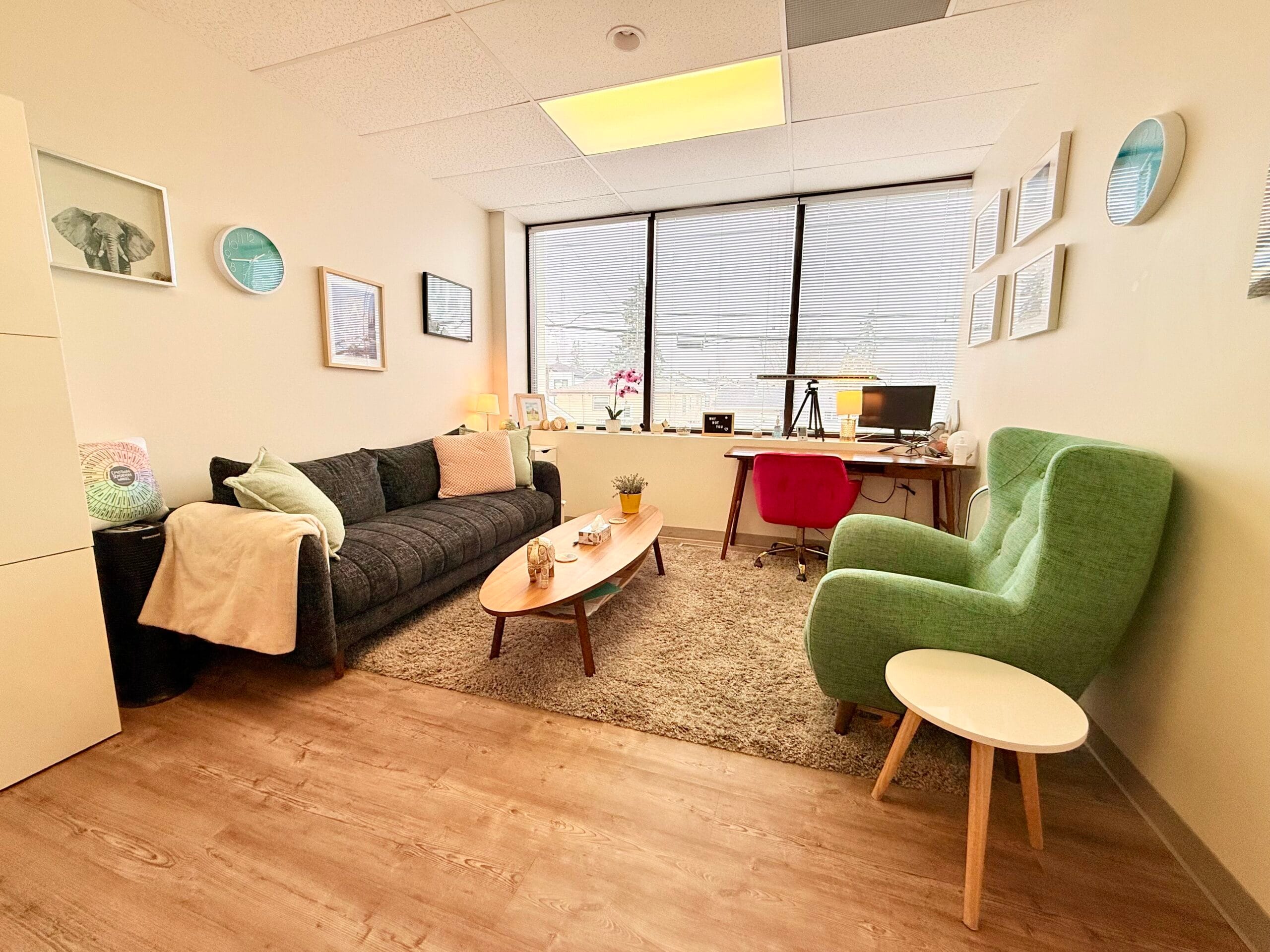
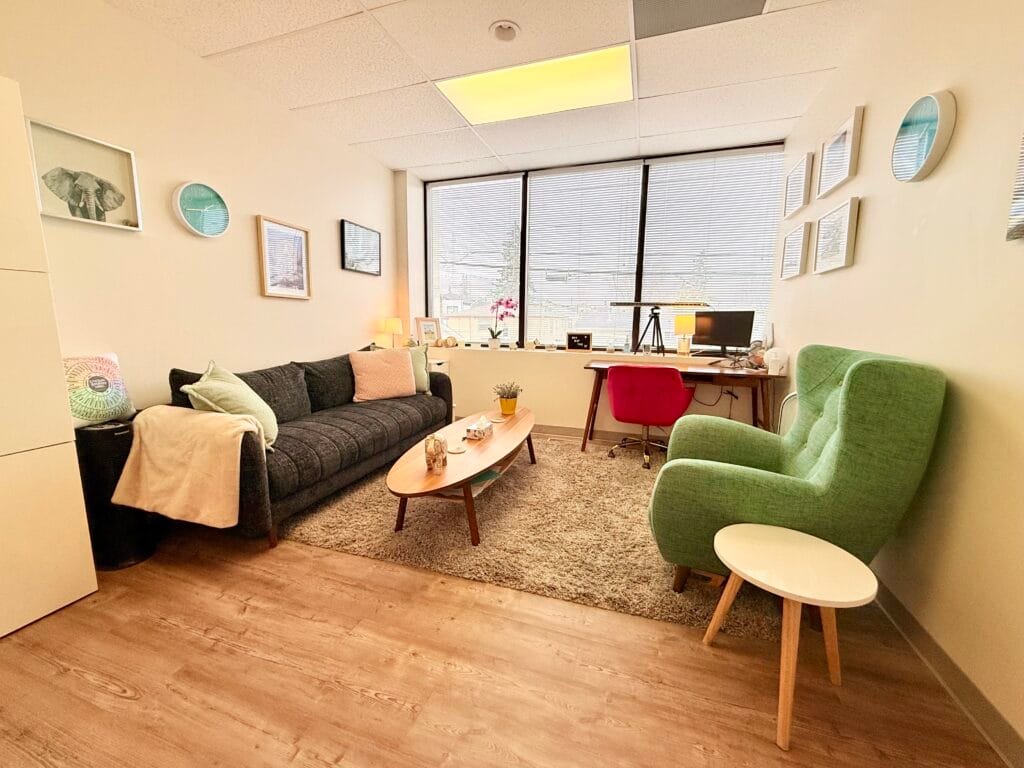
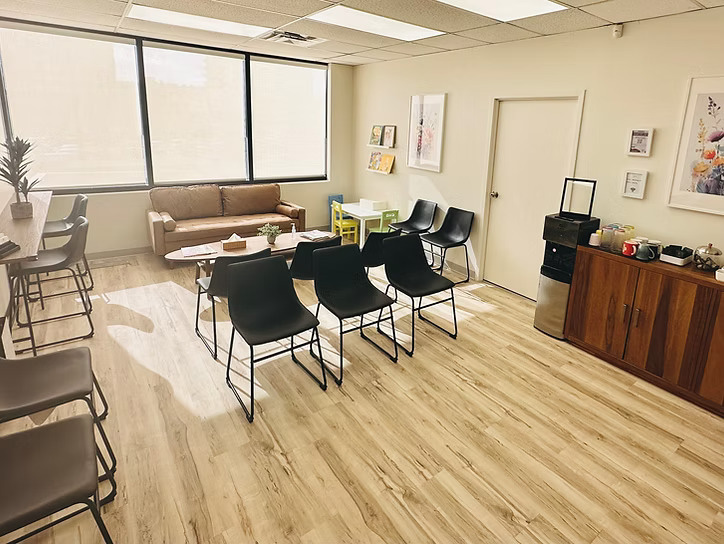
Our Calgary Office Space
Our thoughtfully designed counselling spaces are crafted to create a warm, welcoming environment where you can feel completely at ease.
Get Started With Solasta in Three Easy Steps
Find Your Therapist
Book Online
Choose a date and time that fits your schedule and receive instant confirmation of your appointment.
In-person or Online
Visit our welcoming Calgary office or meet with your therapist online from the comfort of your home.