


Anger Management Calgary

Anger itself isn’t the problem — it’s a normal emotion, and sometimes a useful signal. The problem is when it shows up faster or bigger than the situation calls for, or when it’s damaging relationships you actually care about. At Solasta, our registered psychologists and registered provisional psychologists help you understand what’s underneath the anger, not just manage it in the moment.

anger management calgary

What Is Anger Management Counselling?

Anger is often described as a “secondary emotion” — it frequently shows up covering for something else: hurt, fear, shame, or feeling unheard or out of control. Anger management counselling doesn’t ask you to stop feeling angry. It helps you understand what’s actually triggering the reaction, recognize it earlier, and respond in a way that doesn’t cost you relationships, work, or your own sense of who you are afterward.

At Solasta, this work is grounded primarily in Cognitive Behavioural Therapy (CBT) — identifying the specific thoughts and situations that escalate your reactions, and building concrete, practical alternatives you can actually use in the moment, not just in theory.

Anger also has a physiological side that’s easy to underestimate. When something triggers a strong reaction, your body shifts into a stress response — heart rate spikes, muscles tense, and the part of your brain responsible for careful, considered decisions (your prefrontal cortex) effectively goes offline in favour of a faster, more reactive system. This is sometimes called an “amygdala hijack,” and it’s why in-the-moment logic (“just calm down”) rarely works — by the time you’re already reactive, the part of your brain that would respond to that advice isn’t fully in charge. Effective anger management works with this reality rather than against it: catching the escalation earlier, before the hijack takes over, and building a body-based toolkit alongside the cognitive one.

anger management calgary

Therapists Specializing in Anger Management Counselling

Signs You Might Benefit from Anger Management Counselling

anger management calgary

Anger looks different from person to person, and it doesn’t always look like yelling or outbursts. If you recognize several of these patterns, counselling can help you understand what’s driving them and build a different response.

Physical Signs

Before an outburst happens, your body often gives warning signs — a tight jaw, clenched fists, a racing heart, heat in your face or chest, or a feeling of pressure building that seems to come out of nowhere. Many people don’t consciously notice these cues until they’ve already reacted, but learning to catch them earlier is one of the most effective tools in anger management.

Behavioural Patterns

This can include raising your voice, slamming doors or objects, walking away mid-conversation, or — less obviously — going completely silent and withdrawing as a way of managing overwhelming anger. Some people’s anger is loud and visible; others’ is quiet, cold, and just as damaging to relationships.

Cognitive Patterns

Certain thinking styles tend to escalate anger reliably: all-or-nothing judgments about other people’s intentions (“they did that on purpose”), catastrophizing minor inconveniences, or a chronic sense of unfairness or being disrespected that colours how you interpret everyday interactions.

Relationship Impact

Partners, kids, or close friends who seem to be “walking on eggshells” around you, repeated arguments that escalate faster than the original issue warranted, or a pattern of apologizing afterward for something you couldn’t seem to control in the moment.

Workplace and Legal Consequences

Conflict with coworkers or supervisors that’s affecting your job, disciplinary action, or — in more serious cases — legal involvement such as a peace bond, protection order, or a court or workplace referral to complete anger management.

Underlying Emotions

Anger frequently sits on top of something else — anxiety, grief, shame, feeling disrespected, or a longstanding sense of not being heard. If you notice the anger seems disproportionate to the actual trigger, there’s often something underneath worth examining directly.

Who Benefits from Anger Management Counselling

Frequent blow-ups you regret afterward. If you find yourself reacting more intensely than the situation warranted, and then feeling guilt or shame afterward, that cycle is exactly what this work addresses.

Relationship strain. Anger that’s damaging a marriage, a friendship, or a relationship with your kids — even when you know it’s happening and still can’t seem to stop it in the moment.

Workplace conflict. Reactions at work that are putting your job, promotions, or professional relationships at risk.

Chronic irritability. A shorter fuse than you used to have, or than feels normal — sometimes linked to stress, burnout, or an underlying issue like anxiety or depression that hasn’t been addressed directly.

Anger is often the presenting issue that brings men into therapy in the first place, when other struggles haven’t felt like “enough of a reason” to reach out — if that resonates, our Men’s Mental Health page speaks to this pattern directly. And where anger is one part of a broader picture rather than the whole story, this work is often folded into ongoing individual counselling rather than treated as a standalone track.

Court-referred or workplace-referred counselling. If you’ve been asked to complete anger management as part of a legal or workplace requirement, we can provide documentation of attendance and progress where needed — ask about this on your consultation call.

What to Expect in Anger Management Counselling at Solasta

Initial Consultation

Before formal sessions begin, a short consultation call gives you a chance to describe what’s actually happening — the situations, the patterns, and what’s brought you to look for support now — and to ask questions about the process. There’s no obligation, and no judgment about how you got here.

Understanding Your Triggers

The first full sessions focus on mapping your specific triggers and patterns: what situations reliably escalate you, what the early physical and mental warning signs look like for you specifically, and what tends to be underneath the reaction — since two people with the exact same “anger problem” are often working with very different root causes.

Building Practical Skills

From there, work shifts to concrete tools: cognitive strategies for catching and challenging the thoughts that escalate a situation, in-the-moment techniques for interrupting the physical stress response before it takes over, and communication approaches for expressing frustration or setting boundaries without it turning into a blow-up. This isn’t generic advice — the specific tools are matched to your triggers and your life.

Ongoing Support and Practice

Change in this area tends to come from practice, not insight alone — knowing what triggers you is only useful once you can actually apply a different response in real time. Later sessions typically focus on real situations as they come up, refining what’s working and adjusting what isn’t, with the goal of the new patterns becoming close to automatic over time.

Common Myths About Anger and Anger Management

Anger Management Means Suppressing Your Anger

Suppression tends to make things worse, not better — it often shows up later as a bigger reaction, or turns inward as resentment, anxiety, or depression. The goal isn’t to stop feeling angry; it’s to change what you do with it.

Only People With "Anger Problems" Need This


Many people seeking anger management aren’t dealing with dramatic outbursts — they’re dealing with a shorter fuse than they’d like, tension that’s straining a relationship, or a pattern they can see clearly but can’t seem to interrupt on their own. You don’t need to hit a crisis point to benefit from this work.

Anger Management Is Just Learning to "Calm Down"


Breathing techniques and relaxation strategies are part of the toolkit, but the deeper work is understanding what’s actually driving the reaction — often something like anxiety, old hurt, or a longstanding sense of not being heard — and addressing that directly, not just managing the symptom in the moment.

CAP

All of our psychologists are registered with the College of Alberta Psychologists.

PAA

Many of our psychologists are members of the Psychologists’ Association of Alberta.

CCPA

Many of our psychologists are members of the Canadian Counselling and Psychotherapy Association.

FAQs

Yes — “anger management” is the common term, but the actual work is standard evidence-based counselling, primarily CBT, focused specifically on anger triggers, patterns, and responses rather than being a separate discipline.

No. Many people seek this support proactively, without any formal diagnosis, simply because their reactions are affecting their relationships or work.

Yes, and often it is. Part of the first sessions is figuring out what’s actually underneath the anger — addressing the root cause tends to produce more lasting change than working on anger reactions alone.

It varies by person, but many clients notice real shifts in their ability to catch and manage reactions within several sessions, with longer-term work addressing the underlying patterns.

Sessions with a Registered Psychologist or Registered Provisional Psychologist are covered by most extended health benefit plans. Solasta offers direct billing to 30+ insurers. Visit our fees page to confirm coverage.

Yes — available online across Alberta, as well as in person at our Calgary office.

Yes. We can work with clients attending voluntarily or as part of a workplace or court referral, and can provide documentation of attendance and progress where required — ask about this on your consultation call.

No. Coming in and naming the pattern honestly is the starting point for change, not something to be judged for. The goal of the first sessions is simply to understand what’s happening, without shame attached to it.

Often the anger itself is a reasonable response to a real frustration — the work isn’t about deciding whether you’re “allowed” to feel angry, it’s about making sure your response doesn’t cost you more than the original situation warranted.

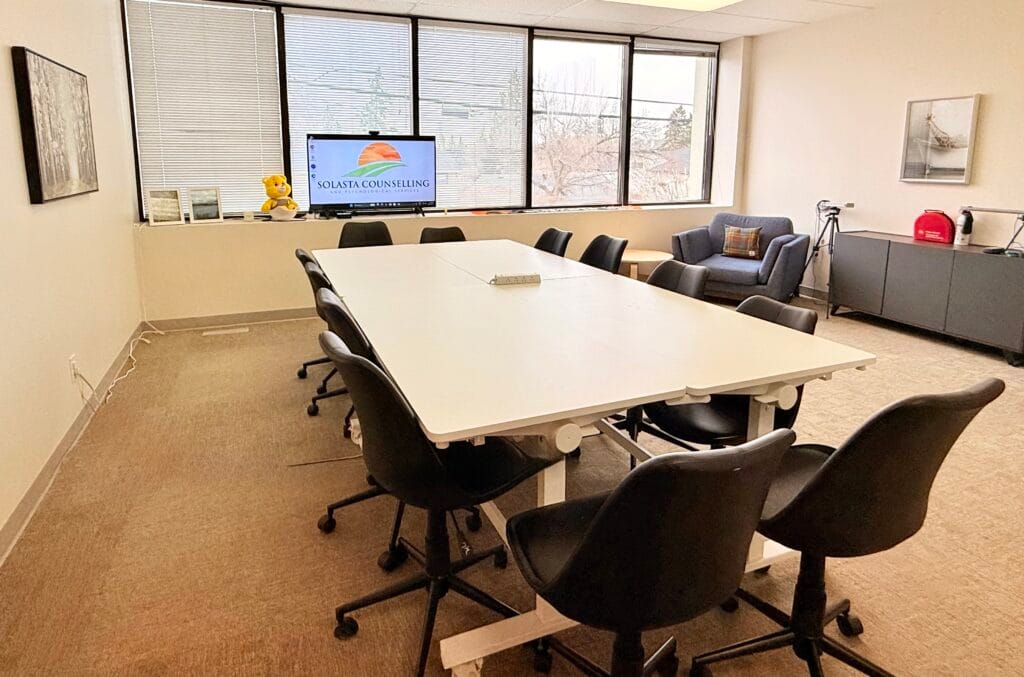
Our Calgary Office Space

Our thoughtfully designed counselling spaces are crafted to create a warm, welcoming environment where you can feel completely at ease.

Get Started With Solasta in Three Easy Steps

1

Find Your Therapist

2

Book Online

Choose a date and time that fits your schedule and receive instant confirmation of your appointment.

3

In-person or Online

Visit our welcoming Calgary office or meet with your therapist online from the comfort of your home.